Top Sheet shelves this piece under Assembly, alongside its neighbours.
In brief
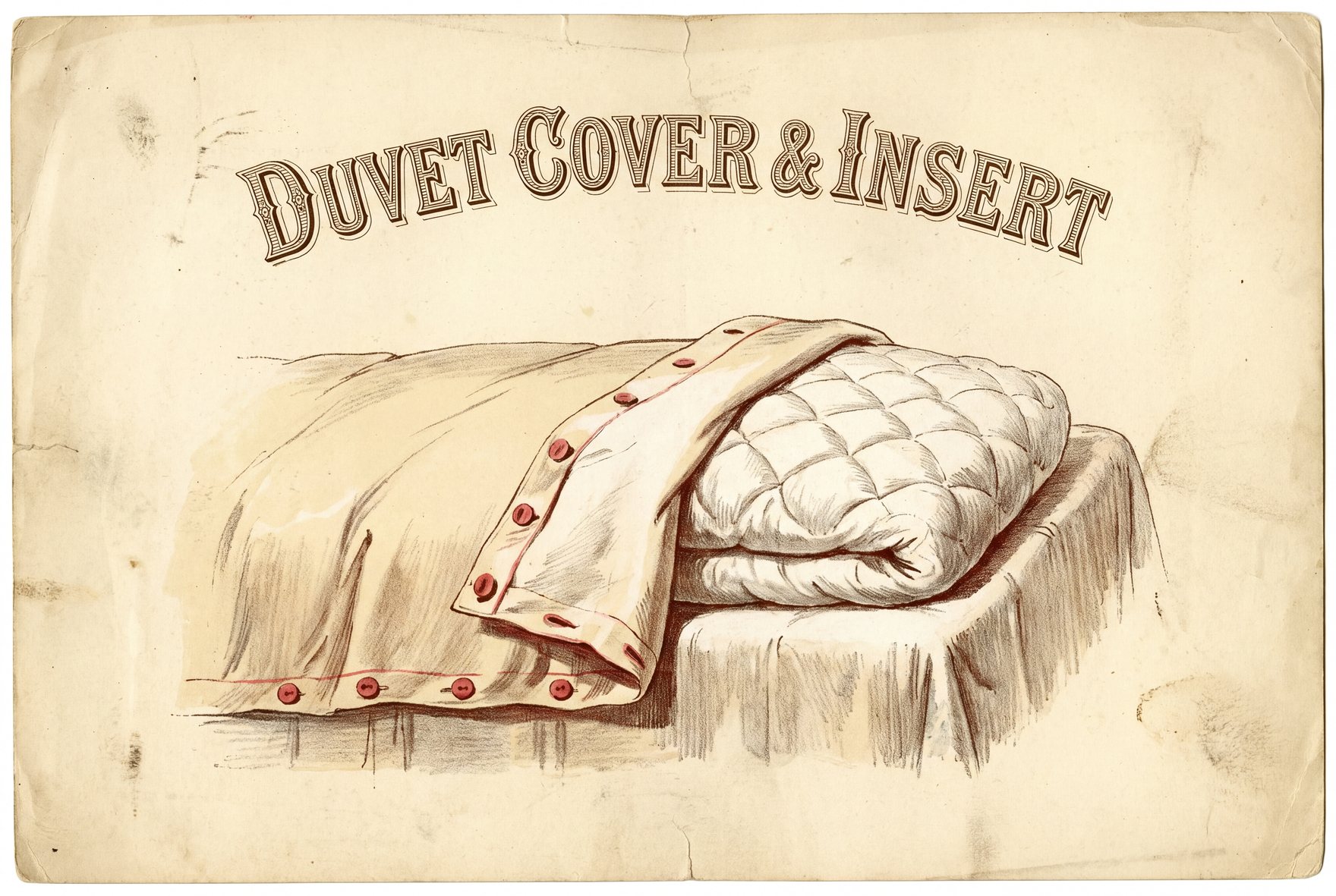
A duvet cover is a large fabric bag, sewn shut on three sides. It holds a filled insert or a comforter. You button, snap or zip the open end closed. You see the cover and you sleep against it. So it takes the sweat and spills and goes in the wash often. The insert inside stays cleaner. Of the 14 seller pages we read, 5 used buttons, 5 used snaps and 4 used zippers.
This guide is for: anyone who owns a duvet cover, has been handed one, or is looking at one and wants to know what it is and what goes inside.
Key Takeaways
- A duvet cover is a removable, washable shell for a filled insert or comforter. Of the 14 seller pages we read, buttons and snaps tied as the most common closure.
- A queen mattress is 60 by 80 inches, and the queen covers on the pages we read ran about 90 inches square (Brooklinen). So the extra cloth hangs over the sides.
- The Sleep Foundation suggests washing the cover every 2 weeks to a month, and a comforter far less often (Sleep Foundation).
What is a duvet cover?
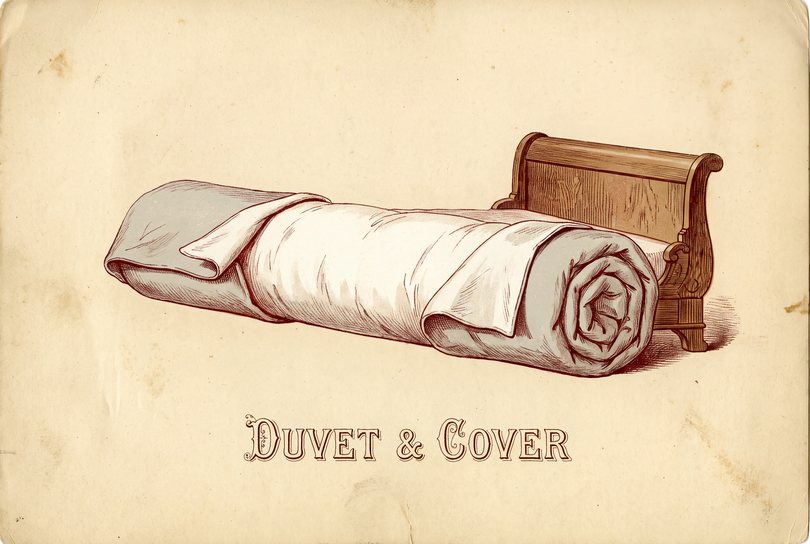
A duvet cover is a washable fabric bag that holds a filled blanket, closes at one end, and takes the dirt so the filling inside stays clean.
A duvet is a filled quilt, and the cover is its washable case. Dictionary.com defines a duvet as a usually down-filled quilt, "often with a removable cover" (Dictionary.com). Vocabulary.com says that with a duvet and cover, you don't need a top sheet or a bedspread (Vocabulary.com). Oxford's learner dictionary is shorter still. It calls the cover a cover that you can wash (Oxford Learner's Dictionaries).
Inside sits the filled layer. American stores often call it an insert. It usually comes in plain white or off-white, because the cover hides it (Sleep Foundation). You never see it. Think of your pillow and its pillowcase. The insert keeps you warm, and the cover is the cloth you touch.
People often confuse the comforter with both of them. Consumer Reports says a comforter is usually one piece with a decorative shell. A duvet, by contrast, has a cover you take off and wash on its own (Consumer Reports). So when you buy a cover, you buy only the outer layer. Your warmth comes from the insert.
| Piece | What it is | Do you see it on the made bed? |
|---|---|---|
| Duvet cover | Removable fabric shell, open at one end | Yes, it is the top layer |
| Duvet insert | Filled shell made to sit inside a cover | No, the cover hides it |
| Comforter | Filled blanket with a finished outer shell | Yes, unless you put it in a cover |
Table basis: our judgement, drawn from the dictionary and Consumer Reports definitions linked above.
Where does the word duvet come from?
The duvet came from northern Europe and is named for the French word for down. Americans often call the filled layer a comforter.
Down-filled quilts gave the duvet its name. The word comes from French, where duvet means down, and Dictionary.com traces it back through Old French to Old Norse (Dictionary.com). You may know the filled layer by another name. In the United States, the usual word for it is comforter. Oxford's learner dictionary gives comforter as the North American word for a duvet (Oxford Learner's Dictionaries). Wikipedia notes that duvet is rare in US English. Here it usually means the cover, not the filled bedding (Wikipedia).
Britain came late. According to Wikipedia, Terence Conran brought duvets to Britain through his Habitat store after seeing them in Sweden (Wikipedia). Before then, a British bed was usually made with a top sheet and blankets. Some had a thin eiderdown on top.
Why should the history matter to you? It explains the muddle you meet on American store shelves. Stores use "duvet," "duvet insert" and "comforter" for the same filled layer. You will also see covers sold as "comforter covers." Go by the inches on the page, not the name on the label. Your cover only needs the thing inside to fit.
What does a duvet cover do on a made bed?
On a made bed the cover is the top layer you see and touch. It sets the look, protects the insert, and can stand in for a top sheet.
On your made bed, the cover has three jobs.
It protects the insert. The Sleep Foundation says the cover keeps sweat, oils and spills off the duvet. That matters more because many people sleep with no top sheet (Sleep Foundation). Consumer Reports adds that the insert can go longer between washes. It does not usually touch your skin or your pets (Consumer Reports).
It sets the look of the bed. The cover is the widest piece of cloth you see. You can change its color or fabric with the seasons. Your filled layer stays the same. That layer costs more to replace and takes more room to store.
It can replace the top sheet. With a duvet and cover, Vocabulary.com says, you don't need a top sheet or a bedspread (Vocabulary.com). Whether you still want one is a separate question, answered in What is a top sheet, and do you need one?
The cover also changes how you make the bed. You shake it out and lay it flat. Then you pull it up to the pillows. Conran's team sold the duvet in Britain as a bed you could make in seconds (Apartment Therapy). You have nothing to tuck in.
How does a duvet cover close and keep the insert in place?
Covers close at the foot with buttons, snaps or a zipper. Ties sewn inside the corners grip the insert so it does not slide into a lump.
A cover is usually two panels of cloth sewn together, with one end left open. Closures include buttons, plastic clasps, zips and ties. Wikipedia lists a cover with no fastener as a flat, flap or envelope style (Wikipedia).
The closure keeps your insert in. Inside ties do a different job: they stop the insert from creeping around in the cover. You knot each tie to a loop on a corner of your insert. Your insert needs loops for this. California Design Den's page says its cover has corner ties inside to keep the comforter from shifting (California Design Den on Amazon).
| Closure | How it shuts | What you trade |
|---|---|---|
| Buttons | A row of buttons along the open end | Slow to do up, but you can sew a lost button back on |
| Snaps | Paired metal or plastic studs pressed together | Quick, but they can pop open while you sleep |
| Zipper | One pull along the open end | Fastest to close, but harder to repair at home |
| Envelope | A fabric flap folds over the opening | No hardware to break, and the least secure |
Table basis: our judgement of how each closure works, drawn from how each one is built. We tested no covers for it.
Getting your insert into the cover takes its own steps. You will find them in How do you put a duvet insert into its cover and close it?
What do seller pages say about duvet cover closures and ties?
Across the seller pages we read, buttons and snaps tied for most common, zippers came third, and the IKEA pages said nothing about inside ties.
Our count: On October 17, 2026, we read 14 seller product pages for full or queen duvet covers. Some were on IKEA's US site. The rest were Amazon listings. For each page, we noted what it says about the closure and the inside ties. We handled, measured and tested nothing. These are counts of what the pages claim.
- Buttons: 5 pages
- Snaps (press studs): 5 pages
- Zipper: 4 pages
The ties fell into three groups too. Every zipper page gives a number of ties, and so does one button page. Others mention corner ties with no number. The IKEA pages never mention ties.
| Seller page | Closure stated | Inside ties stated |
|---|---|---|
| Good Night Bedding | Buttons | Yes, no number |
| California Design Den | Buttons | Yes, four |
| Brooklinen Luxury Percale | Buttons | Yes, no number |
| Brooklinen Organic Cotton | Buttons | Yes, no number |
| IKEA ÄNGSNEJLIKA | Buttons | Not mentioned |
| IKEA ÄNGSLILJA | Plastic snaps | Not mentioned |
| IKEA SCHERSMIN | Plastic snaps | Not mentioned |
| IKEA EKTANDVINGE | Metal snaps | Not mentioned |
| IKEA SLÅNHÖSTMAL | Plastic snaps | Not mentioned |
| IKEA DAGGSALVIA | Plastic snaps | Not mentioned |
| Utopia Bedding | Zipper | Yes, eight |
| Bedsure Prewashed | Zipper | Yes, eight |
| Bedsure PureWoven | Zipper | Yes, eight |
| Bedsure Double Brushed | Zipper | Yes, eight |
If ties matter to you, look for the word on the page. A page that never mentions ties may sell a cover without them. Reviewers on some of these IKEA pages say their covers had none. You can check before you order.
What size duvet cover fits a queen bed?
A queen cover is cut wider and longer than a queen mattress, so the extra cloth can drape down both sides of your bed and cover the edges.
The cover is cut bigger than your mattress. It has to cross the top of your bed and hang down both sides. Brooklinen's size guide shows this. Its queen cover is a square. It is longer than the queen fitted sheet and much wider (Brooklinen). Lay it on your bed, and an even strip of cloth hangs down each side.
You will often see one full/queen size sold for both beds. IKEA labels its sets that way. Brooklinen lists the same cover for full and queen. So on a full bed, your cover hangs lower than it would on a queen.
Match the cover to the insert, not to the mattress. The Sleep Foundation's size chart shows that queen comforters vary by several inches in both width and length (Sleep Foundation). One queen comforter can fit a cover well. Another can bunch inside the same cover. Your mattress size alone will not tell you which.
Measure the filled layer you already own. Lay it flat and measure it both ways. Then compare those inches with the cover size on the seller's page. A cover a little bigger than your insert lies smooth. If it is much bigger, the insert slides around inside it.
Can you put a comforter in a duvet cover?
Yes. A cover holds any filled blanket that fits inside it. Measure the comforter first, since many run longer than the cover sold for the same bed.
The cover cannot tell what is inside it. Sellers say so on their own pages. Good Night Bedding says its cover "can also be used as quilt cover or comforter cover" (Good Night Bedding on Amazon). California Design Den tells you to measure your comforter before you order (California Design Den on Amazon).
Most problems come from the fit. Tom's Guide warns that comforters are larger than duvets, so you may have to size up the cover (Tom's Guide). Compare the longest queen comforters on the Sleep Foundation's chart with a square queen cover. You will see why.
Check two smaller things. If your comforter has no corner loops, the cover's ties have nothing to hold on to. A thick comforter can also feel tight in a cover cut for a thinner insert. The fabric pulls taut along the edges.
So what can your cover hold? Anything flat and filled that fits its inches: an insert, a comforter, a quilt, or nothing. Consumer Reports notes that some duvets come with a sturdier shell. You can use those with or without a cover (Consumer Reports).
How often should you wash a duvet cover?
Wash the cover far more often than what is inside it: every few weeks for the cover, a few times a year for the filled layer.
Wash the cover on a schedule close to your sheets, and the filled layer much less often. The published advice lines up:
- The Sleep Foundation suggests washing duvet covers every couple of weeks to a month, and comforters every few months (Sleep Foundation).
- Consumer Reports says to wash covers monthly and the insert a few times a year, since the insert rarely touches skin (Consumer Reports).
- Cleveland Clinic advises fresh sheets every week or two, and a comforter or pillows about twice a year or as needed (Cleveland Clinic).
Do you sleep without a top sheet? Then the cover touches your skin all night. It does a sheet's job. In that case, WebMD says to wash it whenever you wash your sheets (WebMD).
Check the care label on your cover before the first wash. Fabrics differ. If your cover is linen, the steps in How do you wash linen sheets? apply to it too. Do up the buttons, snaps or zipper before it goes in. That keeps small items in your load from ending up stuck in the corners.
Common questions
Is a duvet cover the same as a comforter?
No. A comforter is a filled blanket with its own finished shell. A duvet cover is an empty fabric shell with no fill of its own. You can put a comforter inside a cover. Many people do.
Can you use a duvet cover with nothing inside it?
Yes. The Sleep Foundation notes that some people use a cover alone as a light blanket in warmer months (Sleep Foundation). It will feel thin. You are under two layers of sheet fabric.
Do you need a top sheet with a duvet cover?
You do not have to use one. A cover often does the top sheet's job. If you go without, wash the cover as often as your sheets.
Why does the insert bunch at the foot of the cover?
The cover may have no inside ties, the ties may be undone, or the insert may be smaller than the cover. Tie every corner. Then check that the two sizes are within a few inches of each other.
Is a duvet cover the same as a sham?
No. A sham is a decorative pillowcase, and shams are often sold in a set with the cover. Utopia Bedding's queen set pairs its cover with two shams sized for standard pillows (Utopia Bedding on Amazon).
What fabrics are duvet covers made from?
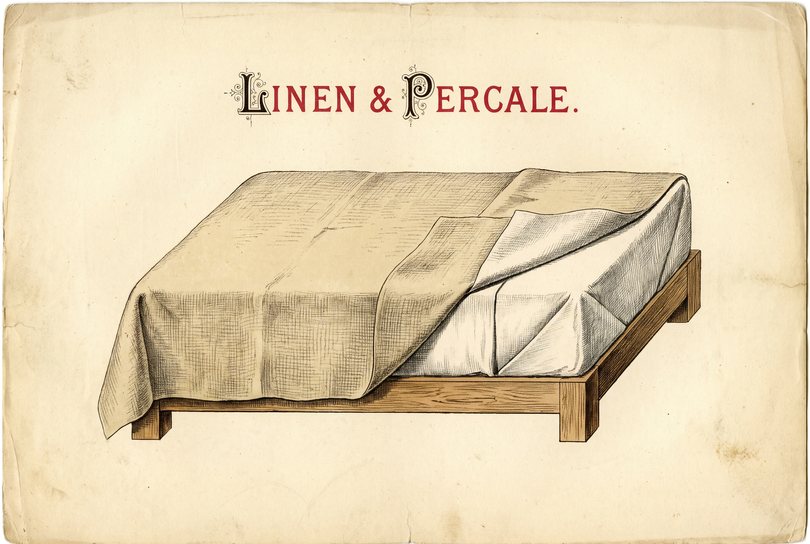
Cotton and polyester are both common. Brooklinen sells a cotton percale cover (Brooklinen) and Bedsure sells one in cotton-like polyester (Bedsure on Amazon). Linen covers exist too (Brooklinen). To find out what yours is made of, read the sewn-in label. Federal rules list covers and comforters as bedding and require each to be labeled (eCFR, Textile Act rules). The fabric changes how the cover feels, but the shape and the closure work the same way.
Sources
Top Sheet's references for this piece, set out in citation order with the heading each one sits under.
- Brooklinen (brooklinen.com), sits under “Key Takeaways”; “What size duvet cover fits a queen bed?”; “Common questions”.
- Sleep Foundation (sleepfoundation.org), sits under “Key Takeaways”; “How often should you wash a duvet cover?”.
- Dictionary.com (dictionary.com), sits under “What is a duvet cover?”; “Where does the word duvet come from?”.
- Vocabulary.com (vocabulary.com), sits under “What is a duvet cover?”; “What does a duvet cover do on a made bed?”.
- Oxford Learner's Dictionaries (oxfordlearnersdictionaries.com), sits under “What is a duvet cover?”; “Where does the word duvet come from?”.
- Sleep Foundation (sleepfoundation.org), sits under “What is a duvet cover?”; “What does a duvet cover do on a made bed?”; “Common questions”.
- Consumer Reports (consumerreports.org), sits under “What is a duvet cover?”; “What does a duvet cover do on a made bed?”; “Can you put a comforter in a duvet cover?”; “How often should you wash a duvet cover?”.
- Wikipedia (en.wikipedia.org), sits under “Where does the word duvet come from?”.
- Apartment Therapy (apartmenttherapy.com), sits under “What does a duvet cover do on a made bed?”.
- Wikipedia (en.wikipedia.org), sits under “How does a duvet cover close and keep the insert in place?”.
- California Design Den on Amazon (amazon.com), sits under “How does a duvet cover close and keep the insert in place?”; “What do seller pages say about duvet cover closures and ties?”; “Can you put a comforter in a duvet cover?”.
- Good Night Bedding (amazon.com), sits under “What do seller pages say about duvet cover closures and ties?”.
- Brooklinen Luxury Percale (amazon.com), sits under “What do seller pages say about duvet cover closures and ties?”.
- Brooklinen Organic Cotton (amazon.com), sits under “What do seller pages say about duvet cover closures and ties?”.
- IKEA ÄNGSNEJLIKA (ikea.com), sits under “What do seller pages say about duvet cover closures and ties?”.
- IKEA ÄNGSLILJA (ikea.com), sits under “What do seller pages say about duvet cover closures and ties?”.
- IKEA SCHERSMIN (ikea.com), sits under “What do seller pages say about duvet cover closures and ties?”.
- IKEA EKTANDVINGE (ikea.com), sits under “What do seller pages say about duvet cover closures and ties?”.
- IKEA SLÅNHÖSTMAL (ikea.com), sits under “What do seller pages say about duvet cover closures and ties?”.
- IKEA DAGGSALVIA (ikea.com), sits under “What do seller pages say about duvet cover closures and ties?”.
- Utopia Bedding (amazon.com), sits under “What do seller pages say about duvet cover closures and ties?”; “Common questions”.
- Bedsure Prewashed (amazon.com), sits under “What do seller pages say about duvet cover closures and ties?”.
- Bedsure PureWoven (amazon.com), sits under “What do seller pages say about duvet cover closures and ties?”.
- Bedsure Double Brushed (amazon.com), sits under “What do seller pages say about duvet cover closures and ties?”.
- Sleep Foundation (sleepfoundation.org), sits under “What size duvet cover fits a queen bed?”.
- Good Night Bedding on Amazon (amazon.com), sits under “Can you put a comforter in a duvet cover?”.
- Tom's Guide (tomsguide.com), sits under “Can you put a comforter in a duvet cover?”.
- Cleveland Clinic (health.clevelandclinic.org), sits under “How often should you wash a duvet cover?”.
- WebMD (webmd.com), sits under “How often should you wash a duvet cover?”.
- Bedsure on Amazon (amazon.com), sits under “Common questions”.
- Brooklinen (brooklinen.com), sits under “Common questions”.
- eCFR, Textile Act rules (ecfr.gov), sits under “Common questions”.