Do you need a top sheet, and what size flat sheet fits your bed?
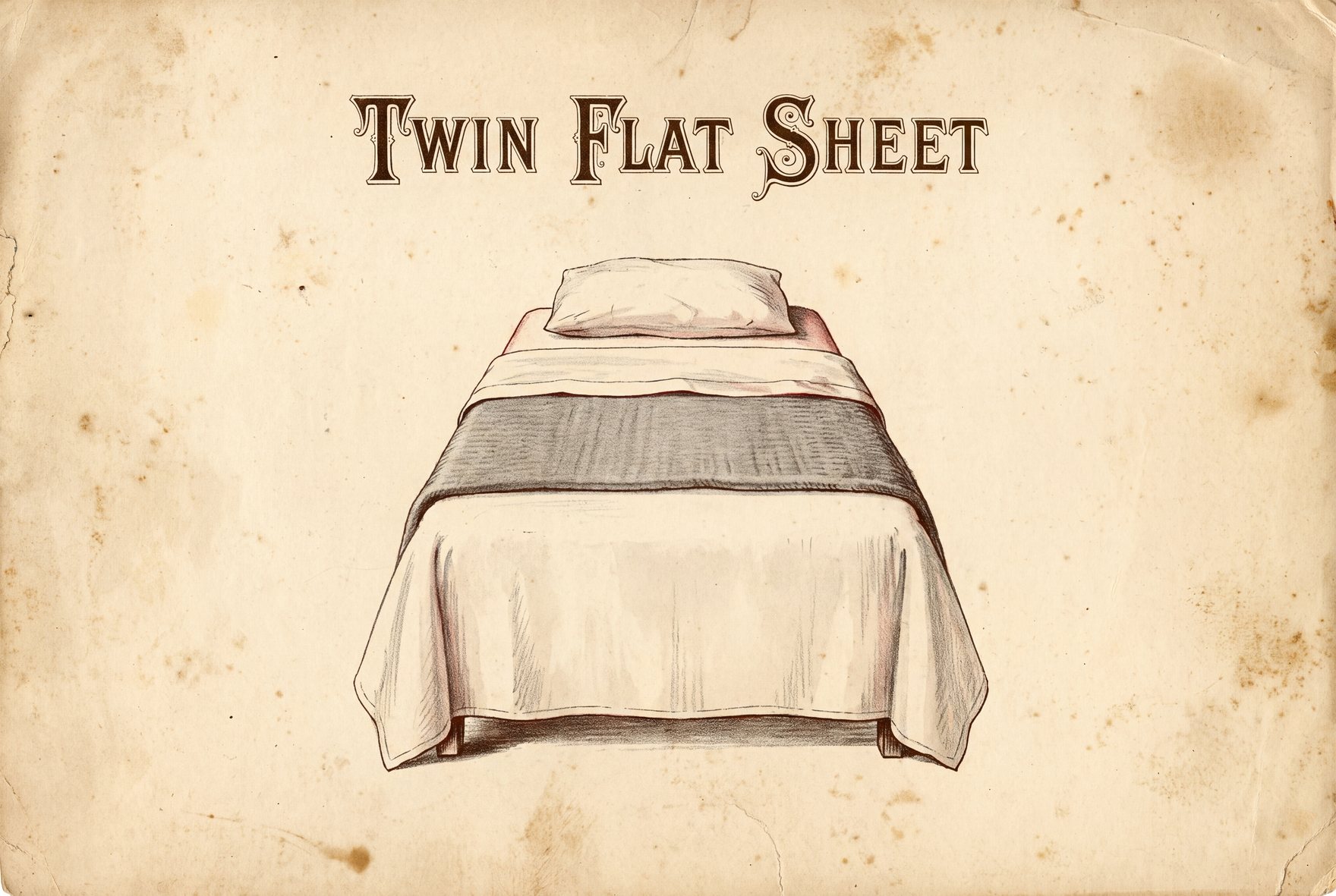
A top sheet is the flat sheet that lies between you and your blanket. Using one is a matter of habit. The size question has a clearer answer, and it turns on how deep your mattress is.
Short answer: A top sheet is optional, but most Americans still use one. YouGov found that 79% of people 55 and older always or often do, compared with 49% of people aged 18 to 24. It keeps your blanket clean. You wash the sheet weekly and the blanket less often. For size, buy the flat sheet named for your bed and check the width. A standard twin is 66 by 96 inches, per American Textile's size chart. Measure your mattress depth first.
This guide is for: people in the United States deciding whether to keep a top sheet, or buying a twin, queen or king flat sheet that has to fit.
Key Takeaways
- About two in three US adults use a top sheet. In YouGov's survey, 65% of men and 68% of women said they always or often sleep under one.
- A standard queen flat sheet is 90 by 102 inches. American Textile's chart pairs it with a 60 by 80 inch mattress, and The Company Store rates its standard flat sheet for mattresses up to 16 inches deep.
- The size name does not settle the size. We read eight seller pages on September 25, 2026. Four listed a twin flat sheet 96 inches long, two listed 102 to 105 inches (L.L.Bean, Red Land Cotton), and two listed 110 inches or more (Eucalypso, Yves Delorme).
On This Page
What is a top sheet, and how is it different from a fitted sheet?
A top sheet is a flat, unfitted sheet that lies between you and your blanket, and stores sell it under the name flat sheet.
A fitted sheet has elastic corners that grip the mattress. A top sheet has no elastic at all. It is a plain hemmed rectangle. It is cut larger than the mattress. You let it hang down the sides and tuck it in at the foot. You sleep on the fitted sheet and under the top sheet. Your blanket goes above it. TODAY's shopping desk describes a top sheet as the layer between your body and your comforter. Its job is to keep the rest of your bedding clean.
Stores use both names for one product. A seller titles its listing individual flat (top) bed sheets. Search for a twin top sheet or a twin flat sheet, and you should see matching results.
Making a bed with a top sheet takes a minute. Lay it over the fitted sheet, finished side down. Line the top edge up with the head of the mattress. Tuck the foot end under the mattress, and tuck the sides too if you like a snug bed. Put your blanket on next. Then fold the top edge of the sheet back over the blanket by about a hand's width. The finished side now shows. That fold keeps the blanket's edge away from your face and neck. You can wash the sheet far more easily than the blanket. If you share a bed, tuck the sides firmly so one sleeper cannot pull the sheet off the other. It also looks neater.
Do you need a top sheet on your bed?
You do not need one, but most people use one: a YouGov poll found about two in three American adults always or often sleep under a top sheet.
The clearest public figures come from a YouGov survey of US adults. Older adults use a top sheet most, while younger adults are more evenly divided. Men and women answered almost alike.
Laundry makes the best case for a top sheet. A sheet goes in the wash every week without trouble. A comforter is bulky and slow to dry. You probably wash it far less often. If your skin touches the comforter every night, it gets dirty faster than you will want to wash it. The top sheet takes that dirt instead.
Some people skip one for comfort. They kick it loose every night, or dislike sleeping under an extra layer. If that sounds like you, a washable cover works better than a bare comforter. Others find the sheet tangles and ends up at the foot of the bed. You can often fix that.
Our judgement: skip the top sheet only if your blanket sits inside a washable duvet cover. You also have to strip that cover every week. Then the cover does the top sheet's job. If you sleep under a bare comforter or quilt, keep the flat sheet. It is easy to wash. It also protects a blanket that is hard to wash.
What size flat sheet fits your mattress?
Match the flat sheet to your bed name, then check the listed width, because width decides whether the sheet reaches down the sides.
US sheet sizes are named after mattress sizes. The flat sheet you buy is cut well oversize. The table below uses the size chart American Textile publishes. The Company Store's percale flat sheet page lists matching flat sheet sizes.
| Bed | Mattress top (inches) | Standard flat sheet (inches) |
|---|---|---|
| Twin | 39 x 75 | 66 x 96 |
| Twin XL | 39 x 80 | 66 x 96 |
| Full | 54 x 75 | 81 x 96 |
| Queen | 60 x 80 | 90 x 102 |
| King | 78 x 80 | 108 x 102 |
| California king | 72 x 84 | 108 x 102 |
Some sizes repeat. Twin and twin XL share a flat sheet, and king and California king share another. The fitted sheets differ within each pair. A flat sheet does not grip anything. So a single size can serve both beds.
Check the width first. On a twin or full, the length rarely runs short. The width decides whether the sheet reaches down the sides of the mattress. A flat sheet a size too big is fine, because you tuck in the extra. A sheet a size too small will not reach. Tugging will not fix it.
If you are buying for the largest bed, What size is a king size flat sheet? covers that size in more detail. Whatever your size, measure your mattress depth before you shop. Include any topper.
How deep a mattress can a standard flat sheet cover?
A standard flat sheet leaves a good tuck only on a mattress under about a foot deep, so on a deeper bed you need a wider sheet.
No maker publishes this figure. We worked it out from the standard sizes above. The method is subtraction on published figures. Take the sheet width and subtract the mattress width. Halve the result. That is how far the sheet hangs past each side. Subtract your mattress depth from it, and the remainder is your tuck. Count a topper as part of the depth. We called a tuck good when it left a few inches on the sides and at the foot.
| Bed | Hangs past each side | Spare length | Our judgement: tucks well on mattresses up to |
|---|---|---|---|
| Twin | 13.5 in | 21 in | about 10 in deep |
| Twin XL | 13.5 in | 16 in | about 10 in deep, tight at the foot |
| Full | 13.5 in | 21 in | about 10 in deep |
| Queen | 15 in | 22 in | about 12 in deep |
| King | 15 in | 22 in | about 12 in deep |
| California king | 18 in | 18 in | about 12 in deep, limited by length |
Compare your bed with the last column. If your mattress and topper are deeper, the standard sheet will barely tuck in. The Company Store rates its standard flat sheet for mattresses deeper than our last column allows. By our arithmetic, its queen would fall short of the bottom edge on that bed. Its deep-pocket queen flat sheet is cut wider.
On a deep twin, buy for width. Several sellers cut twin flat sheets wider than standard.
What do seller pages say a twin flat sheet measures?
We read eight seller pages for twin flat sheets and found three different length groups, so the size name alone does not tell you the length.
We read eight US seller pages for flat sheets on September 25, 2026. We noted the length each gives for its twin flat sheet. The L.L.Bean page did not label its sizes. We took its smallest one. Four pages list 96 inches, two list 102 to 105 inches, and two list 110 inches or more.
| Stated twin flat sheet length | Pages | Seller and stated size (inches) |
|---|---|---|
| 96 inches | Four | The Company Store 66 x 96; Crane & Canopy 66 x 96; Naturesoft Bedding 66 x 96; American Textile 66 x 96 |
| 102 to 105 inches | Two | L.L.Bean 72 x 102, smallest size listed; Red Land Cotton 74 x 105 |
| 110 inches or more | Two | Eucalypso 71 x 110; Yves Delorme 70 x 116 |
The widths follow a pattern too. Every page in the first group lists a standard twin width. Every page in the other groups lists a wider sheet.
A twin from a seller can be several inches wider than a twin from the next. That extra width is what a deep mattress needs. Only the dimensions line shows it.
This count covers published claims and nothing else. It says nothing about how any sheet feels, shrinks or wears. The set is also small. We picked the pages from search results, so the sample is not random. Treat the count as a reminder to check the measurements on any listing.
Is a cotton flat sheet worth choosing over a blend?
A cotton flat sheet handles hot washes and bleach, and under federal rules a label may say 100% cotton only when the sheet holds no other fiber.
Most flat sheets you will find are cotton, and federal rules control how it is named. The FTC's labeling guide lists sheets among the bedding products the Textile Act covers. The rules themselves sit in the federal textile labeling regulations. A label has to name each fiber above a small minimum share of the weight, in order, with its percentage. A sheet can be labeled all cotton only if it holds nothing but cotton, apart from trim. Names like Pima have to appear next to the plain word cotton.
Read the label to confirm. A listing may call a sheet soft like cotton without giving a percentage. The fiber label will show you the real mix.
Why choose cotton? It stands up to hot water, which matters if you wash to control allergies. White cotton can also take chlorine bleach. The American Cleaning Institute says bleach works on many whites and colorfast washables. Whatever fiber you buy, check the care label before a hot cycle.
The weave shapes how the sheet feels. Percale is crisp; sateen is smoother and heavier, as a seller of single sateen flat sheets describes it. Our guides to percale sheets and sateen sheets explain how to pick a good set. Flat sheets often sell on their own. You can match one to a fitted sheet you already own.
How do you keep a white flat sheet white?
Wash whites only with whites, add chlorine bleach a few minutes after the cycle starts, and read the care label before any bleach goes in.
White sheets show every trace of wear. You keep them bright through the way you wash them.
Wash whites only with whites. A laundry expert at Whirlpool's Institute of Home Science told TODAY that mixed loads should go. The expert added that you can bleach all-cotton sheets whenever they look dingy.
For chlorine bleach, the American Cleaning Institute advises you to read the label and dilute as directed. Add it a few minutes after the wash starts. That way it does not destroy the enzymes and whiteners in your detergent. Oxygen bleach, sold as color-safe, is gentler, according to the institute. It keeps whites white better than it restores them.
Read the care label first. The institute notes that being white does not make an item safe to bleach. Fiber content, finishes and some trims can rule it out. That is one more reason to look for an all-cotton label.
Our judgement: use oxygen bleach as your routine. Save chlorine for a sheet that has already turned gray. A white sheet rarely needs chlorine. That holds if you wash it weekly and keep it out of mixed loads. If your sheet is a blend, follow its label instead.
How often should you wash a top sheet, and how hot?
Wash your sheets once a week, and if dust mites trouble you, allergy guidance calls for water of at least 130°F to kill the mites.
If you have a dust mite allergy, Nationwide Children's Hospital advises that you wash your sheets, blankets and other linens in hot water every week. The hospital says the water must be hot enough to kill the mites.
Your machine's normal hot setting may not get that hot. A sanitize cycle may get you there, so check your washer's manual. Handle hot laundry with care. The Indiana Department of Health warns that water this hot can scald skin.
If you have no allergy, you can use any temperature your care label allows. Weekly washing is a sound habit either way. Sweat and skin oils build up in bedding, so a routine keeps your sheets fresher. Pick the same day each week.
Your top sheet goes into the weekly wash with the fitted sheet and pillowcases. The blanket above it can wait. If you have a dust mite allergy, the hospital's advice covers blankets too. Then a top sheet will not buy you a longer gap. For everyone else, it saves work. It keeps the heaviest item on your bed out of the machine most weeks.
Common questions
Is a flat sheet the same thing as a top sheet?
Yes. Stores use both names for one product. It is a hemmed rectangle with no elastic, and it lies over you. The fitted sheet has elastic corners and covers the mattress.
Can you use a twin flat sheet on a twin XL bed?
You can. Most sellers make one flat sheet for both beds. The twin XL mattress is longer. So you lose some tuck at the foot. On a deep twin XL, look for a longer twin flat sheet. Measure the mattress first, including any topper.
Will a queen flat sheet work on a full bed?
It will. It even helps on a deep full mattress. The queen sheet is wider, so it hangs further past each side. You tuck the extra away. If you dislike a bulky tuck, stay with the full size.
Why does your top sheet end up at the foot of the bed?
Usually too little fabric is tucked in to hold it. Check your mattress depth against the table above. A wider sheet often fixes the problem. A firm tuck at the foot helps too.
Do you need a top sheet if you use a duvet cover?
Not if you strip and wash the cover every week. Then the cover does the top sheet's job. If you wash the cover less often, a top sheet saves you work. A top sheet also gives you a lighter layer on warm nights.
Can you wash a white cotton flat sheet hot?
Usually yes, if the care label allows it. Allergy guidance recommends hot water against dust mites. White cotton can take bleach as well. Check the label for finishes that rule out bleach.