What is the difference between a flat sheet and a fitted sheet, and do you need both?
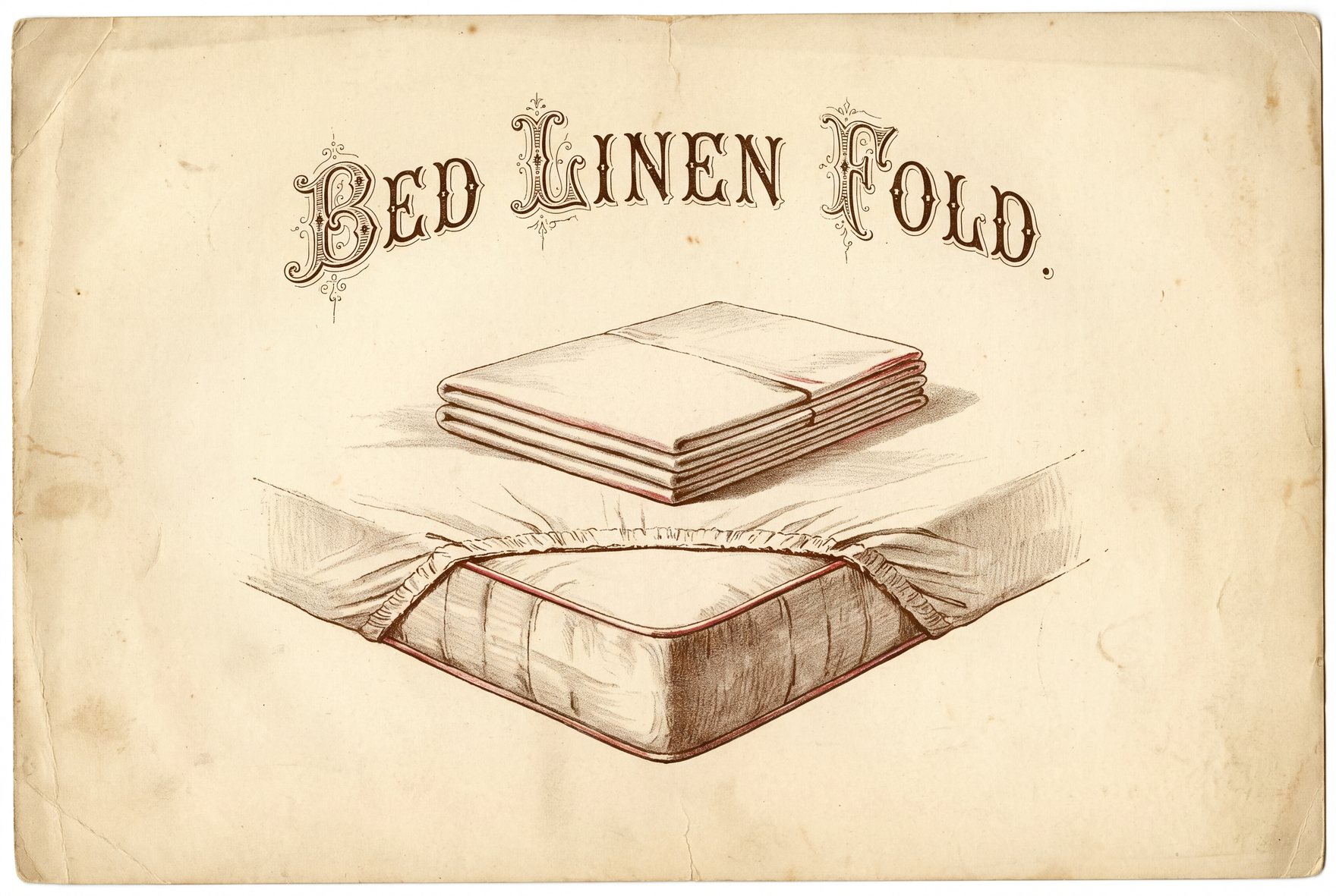
A standard American sheet set comes with one of each. Folded on a shelf, they look alike. They do different jobs, though, and each one goes wrong in its own way when you buy the wrong size or put it on the wrong layer.
Short answer: A fitted sheet has elastic corners and covers the mattress. A flat sheet is a plain rectangle that lies over you, under the blanket. On a queen bed the fitted sheet matches the 60 by 80 inch mattress (Mattress Warehouse). The flat sheet is much larger: one seller lists it at 90 by 102 inches (The Company Store). You need the fitted sheet. Whether you need the flat sheet depends on how easily you can wash your blanket.
This guide is for: people setting up a bed, replacing one sheet from a set, or deciding whether to drop the top sheet.
Key Takeaways
Three points cover most of the decision: what each sheet does, how to size the fitted one, and when the flat one earns its place.
- You need the fitted sheet, and the flat sheet is optional. The fitted sheet is cut to the top of the mattress, a Queen is 60" x 80" (Mattress Warehouse), plus a pocket that wraps down the sides and tucks underneath.
- Shop by the number, not the label. On the seller pages we read, fitted sheets claimed maximum mattress heights from 12 inches (Amazon listing) to 22 inches (Egyptian Linens).
- Most older people still use a flat sheet. In a YouGov poll, 79% of people 55 and up said they "always" or "often" use a top sheet, against 49% of people aged 18 to 24.
On This Page
Each question below is a section of this guide, listed in the order it appears, so you can jump to the one you came to answer.
What is the difference between a flat sheet and a fitted sheet?
A flat sheet is a plain rectangle you tuck in by hand. A fitted sheet has four sewn corners and elastic that grip the mattress.
The difference is shape, and shape decides the job. A fitted sheet has sewn corners and elastic, so it wraps the mattress and stays put. A flat sheet is a hemmed rectangle. It has no elastic, so it gets tucked in or left to hang. The household sheeting standard ASTM D5431 names flat, fitted and waterbed sheets among the products it covers.
Fitted sheets came long after flat ones. The deep corner pocket came from a patent that names Gisele Jubinville and was assigned to Springs Industries (Google Patents). The Royal Alberta Museum says her idea was deeper mitred corners. They act like a pocket for each corner of your mattress.
Judge a fitted sheet by its fit. Judge a flat sheet by its size and feel, since it is meant to move.
| Fitted sheet | Flat sheet | |
|---|---|---|
| Shape | Rectangle with four sewn corners and elastic | Plain hemmed rectangle |
| Where it goes | Over the mattress, under you | Over you, under the blanket |
| Cut to | The mattress top plus a pocket | Wider and longer than the mattress |
| What goes wrong | Corners pop off a mattress too deep for the pocket | Pulls loose and bunches at the foot |
| Can you skip it? (our judgement) | No, unless you tuck a flat sheet in its place | Yes, if your duvet cover gets washed as often as your sheets |
Which sheet goes on the bottom and which goes on top?
The fitted sheet goes on the mattress first. The flat sheet lies over it, under your blanket, and you sleep between the two.
The fitted sheet goes on first. It sits straight on the mattress or a mattress protector, which is why sellers also call it the bottom sheet. The flat sheet goes over it. You sleep between the two, and your blanket, comforter or duvet goes on last.
"Top sheet" and "flat sheet" name the same piece. One word describes where it goes, and the other describes its shape. Not sure you want one? Our guide on whether you need a top sheet covers that choice in full.
Getting the fitted sheet on the right way round takes a moment. On a queen or king, the long sides and short ends are easy to confuse while the sheet is bunched in your hands. Some sellers sew small tags at the head and foot. One sateen listing says its tags simplify bed making (Amazon listing). No tags? Start with one corner. Then stretch the corner diagonally opposite, which holds the sheet while you do the other two.
The flat sheet has a right way up too. Lay it with the printed or smoother side facing down, so that side shows when you fold the top edge back over your blanket. Put the wide hem at the head of the bed. The fold also keeps the blanket off your face and neck. Skin oil and sweat collect there.
What size are flat and fitted sheets for each bed?
A fitted sheet is cut to the mattress top. A flat sheet is cut much larger, so it can hang over the sides and tuck under the foot.
You size the fitted sheet to your mattress. Its top panel matches the mattress measurements. The only extra is the pocket. Some sellers add an inch of ease to the top panel as well.
Flat sheet sizes vary more between sellers. A queen flat sheet has to cover you, hang down both sides of the bed and still leave fabric to tuck under the foot. Each seller cuts that extra differently. One listing makes its queen flat sheet slightly wider than the one in the table below (Wholesale Beddings). An oversized set goes much larger again (Egyptian Linens). Mattress height uses up the overhang. If your bed is thick, check the flat sheet size.
| Bed | Mattress, inches | Fitted sheet top, inches | Flat sheet on one seller's page, inches |
|---|---|---|---|
| Twin | 38 × 75 | 38 × 75 | 66 × 96 |
| Full | 54 × 75 | 54 × 75 | 81 × 96 |
| Queen | 60 × 80 | 60 × 80 | 90 × 102 |
| King | 76 × 80 | 76 × 80 | 109 × 102 |
| California king | 72 × 84 | 72 × 84 | 109 × 102 |
Mattress sizes are from Mattress Warehouse. Twin, full and queen flat sheets are from The Company Store. King flat sheets are from one sateen set's page.
A flat sheet tolerates a size mismatch. A fitted sheet does not. If you want more on overhang, our flat sheet size guide and the page on king size flat sheets go into it in more detail.
What does deep pocket mean on a fitted sheet?
Deep pocket has no single meaning. Sellers and guides draw the line at different depths, so read the stated maximum mattress height.
Pocket depth is how far the sides of a fitted sheet drop from the top panel. The pocket has to cover the mattress. It also has to reach underneath. The trouble is that "deep pocket" has no shared definition. The three guides we read put the lines between standard, deep and extra deep in three different places.
| Label | Beddley | SizeFit | Puffy |
|---|---|---|---|
| Standard | Mattresses up to 12 in | Mattresses 7 to 9 in | Pockets 7 to 14 in |
| Deep | Mattresses 13 to 16 in | Mattresses 12 to 15 in | Pockets up to 22 in |
| Extra deep | Mattresses 17 to 22 in | Mattresses 16 to 22 in | Not a separate tier |
| Our reading | The label tells you little | Use the stated number | Check whether it means pocket or mattress |
Look closely at what each column describes. Some guides give the mattress a sheet fits, while others give the depth of the pocket itself, and pocket depth and maximum mattress height are different figures. One listing names both. Its pocket is an inch shallower than the tallest mattress it claims to fit (Linen Home on Amazon).
So measure before you buy. Measure your mattress from the bottom seam to the top, with any topper and protector in place. Then pick a sheet whose stated maximum is at or above that number. Leave an inch to spare.
How deep are the pockets on sheets sold today?
We read 13 seller pages and sorted each fitted sheet by the deepest mattress it claims to fit. Six of 13 claimed more than 16 inches.
We read 13 seller product pages for cotton percale and sateen sheets on September 26, 2026. On each one, we noted the deepest mattress the fitted sheet claims to fit. We did not handle, fit or test any sheet, and every figure below is only what a seller's page states. The pages came from searches, and some of those searches asked for deep pockets. Treat this as a snapshot of what you will find when you shop, not a market share. Where a page offered standard and deep versions, we counted the version that page was selling.
| Deepest mattress the page claims | Pages | Which pages |
|---|---|---|
| 14 inches or less | 2 | Percale 500 TC on Amazon (12 in), California Design Den sateen on Amazon (14 in) |
| 15 to 16 inches | 5 | Quince set, Quince fitted set, Linen Home on Amazon, Brooklinen, California Design Den 600 TC on Amazon |
| More than 16 inches | 6 | The Company Store percale, The Company Store sateen, Premier sateen set (20 in each); Wholesale Beddings, Egyptian Linens percale, Egyptian Linens sateen (22 in each) |
The spread is the useful part. Two sheets that both say deep pocket can differ by several inches. One seller sells both under one name. Its page lists a standard version and a deep pocket version, each with its own maximum mattress height (The Company Store). You cannot shop by the label. Find the number on the page and compare it with your tape measure.
Can you use a flat sheet instead of a fitted sheet?
Yes, if you fold the corners tightly. A flat sheet on the bottom works, but it tends to pull loose on thick mattresses and restless nights.
Yes. Before the fitted sheet existed, that was how everyone made a bed. Lay the flat sheet over the mattress. Then you tuck the long sides under and fold each corner into a hospital corner so the fabric locks against itself.
It works best on a thin mattress with a still sleeper. A tall mattress leaves you less fabric to tuck once the sides are covered. Do you turn a lot at night? Then the tucks work loose and the sheet ends up in a ridge under your back. No elastic grips the corners, so movement wins in the end.
You might choose it anyway. A flat sheet folds neatly and fits any mattress close to its size. It swaps with your other flat sheets. That makes it handy for a guest bed you rarely use, where one sheet type is simpler to store.
The reverse does not work. A fitted sheet cannot go over you, because the elastic pulls it into a bowl shape.
Worn-out fitted sheets are the usual reason people try this. There is an easier fix. Many sellers sell the fitted sheet on its own, and one page sells a single fitted sheet with no set attached (Brooklinen). Replacing only the worn piece costs you less than a new set. The rest of your bedding still matches.
Do you need a flat sheet if you have a fitted sheet?
No rule says you need one. A flat sheet mainly keeps your blanket or comforter clean, so it matters most when that layer is hard to wash.
You don't need one. A flat sheet is a washable barrier between you and your blanket. Is your blanket or comforter hard to wash? Then the flat sheet earns its place. A duvet in a removable cover can do the same job, with one catch. You then have to wash that cover as often as you wash your sheets.
Habits split by age, though less than the jokes suggest. In a YouGov poll, almost half of the youngest adults said they "always" or "often" use a top sheet. Among people 55 and older, the figure was 79%. So the youngest group splits roughly in half, and the older groups mostly keep the flat sheet.
Temperature matters too. On a hot night a flat sheet alone gives you a light cover. In winter it adds a thin layer under the duvet. Kick it to the foot of the bed every night, and you get none of those benefits. You only get the extra laundry.
Want to find out if you'd miss it? Try a week without one and watch whether your duvet cover goes into the wash as often as your sheets. If it does, skipping the flat sheet costs you nothing. If it doesn't, keep the flat sheet.
How often should you wash flat and fitted sheets?
Wash both every week or two. The fitted sheet touches your skin all night, and the flat sheet does too, so they share one schedule.
Wash both sheets on the same schedule. Cleveland Clinic advises washing your sheets every week or two (Cleveland Clinic). If you have asthma triggered by dust mites, the US Environmental Protection Agency is stricter. It says to wash bedding in hot water once a week and dry it completely (EPA).
The fitted sheet collects the most, because you lie on it all night. The flat sheet touches you too, just less of you. Wash your pillowcases on the same day. That way a clean case never goes back onto dirty bedding.
This is where the flat sheet proves its worth. Without one, the duvet cover sits against your skin, so the duvet cover moves onto the weekly schedule. A duvet cover is bigger than a sheet and slower to dry. Is that a chore you tend to put off? Then keep the flat sheet.
Fitted sheets are also the piece more likely to give out first. The elastic takes strain every time you stretch a corner over the mattress. Hot washes and high dryer heat are hard on elastic as well. That is our reading of how the sheet is built. We have not tested it. When the corners go slack, replace the fitted sheet on its own.
Should you buy a sheet set or single sheets?
Buy a set when your mattress is a standard height. Buy single sheets when you need a deeper fitted sheet or a larger flat sheet.
A set gives you a fitted sheet, a flat sheet and pillowcases cut to match. One queen listing contains two pillowcases, a flat sheet and a fitted sheet (Amazon listing). For a mattress of ordinary height, a set is the simplest buy. It usually costs less per piece.
Buy single pieces when your bed is not standard. Three cases come up most often:
- Your mattress plus topper is taller than the set's fitted sheet allows.
- You want a larger flat sheet, such as a king flat sheet on a queen bed, for a deeper tuck.
- One piece has worn out and the others are fine.
Some sellers sell a set with no flat sheet in it. One percale line offers a fitted sheet with matching pillowcases, and its page says the set does not include a flat sheet (Quince). That suits you if you have already decided to skip the top sheet.
Matching color across separate orders is the weak point of buying singles. Dye batches can differ. A fitted sheet you order this year may not match the flat sheet you bought last year. Buy the pieces together if your colors have to match exactly. Only care about fit? Then mix freely, because a white fitted sheet goes with any flat sheet.
Common questions
Short answers to the smaller questions people ask about flat and fitted sheets, from which side faces down to mixing sheet sizes.
Is a top sheet the same as a flat sheet?
Yes. "Flat" names the shape and "top" names where it goes, and sellers often call a fitted sheet a bottom sheet for the same reason.
Can you put a king flat sheet on a queen bed?
Yes. You get more fabric to tuck at the sides. You also get more overhang on a tall mattress. A king fitted sheet on your queen mattress will sag, though. Size up only the flat sheet.
Why does my fitted sheet keep popping off the corners?
Usually the pocket is too shallow for the mattress. Measure your mattress plus topper from bottom seam to top, then buy a sheet whose stated maximum is above that height.
Which side of a flat sheet faces down?
The printed or smoother side faces down. When you fold the top edge back over the blanket, that side is the one that shows.
Can a fitted sheet go on a bigger mattress?
No. A fitted sheet stretches only a little, so a queen sheet will not cover a king. Match the width and length first, then the depth.
Does a mattress protector go under the fitted sheet?
Yes. The protector sits on the mattress and the fitted sheet goes over it. You can wash a protector, which you cannot do with a mattress. It does add a little height, so measure with it on.