In brief
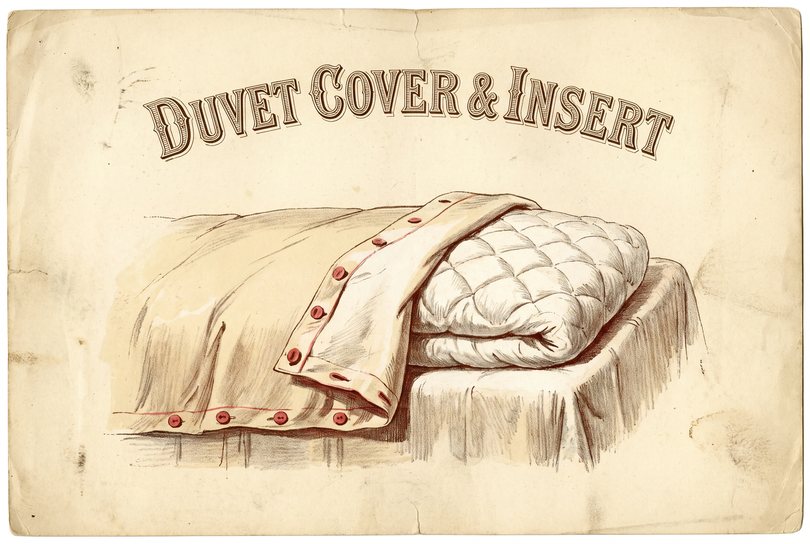
A duvet is a soft, flat bag of down, feathers, wool or synthetic fiber. You sleep under it inside a removable cover, much like a pillow in its case. On a made bed it goes over the fitted sheet. It also goes over the top sheet, if you use one. It replaces your blankets. US stores usually sell it as a comforter. In our count of 10 queen seller pages, 6 listed the duvet at 90 by 90 inches.
This guide is for: anyone in the US who has seen the word duvet on a bedding page and wants to know what it is and where it goes on the bed.
Key Takeaways
Three points carry the page: what a duvet is called in the US, the size most queen pages list, and what a down label must mean.
- A duvet is one filled layer that takes the place of blankets. Dictionary.com defines it as a usually down-filled quilt and dates the word in English to 1750–60. You will also see it sold in US shops as a comforter or a duvet insert.
- Most queen duvets we read about are 90 by 90 inches. That was 6 of the 10 seller pages we counted. Check your duvet's length against your cover's length.
- A label may say "down" only above a set share of down cluster. The American Down and Feather Council requires at least 75% down cluster, and the label has to show the percentage. If you buy a blend, its label must state the minimum down content too.
What is a duvet?
A duvet is a soft, flat bag filled with down, feathers, wool or synthetic fiber, used on top of the sheets in place of blankets.
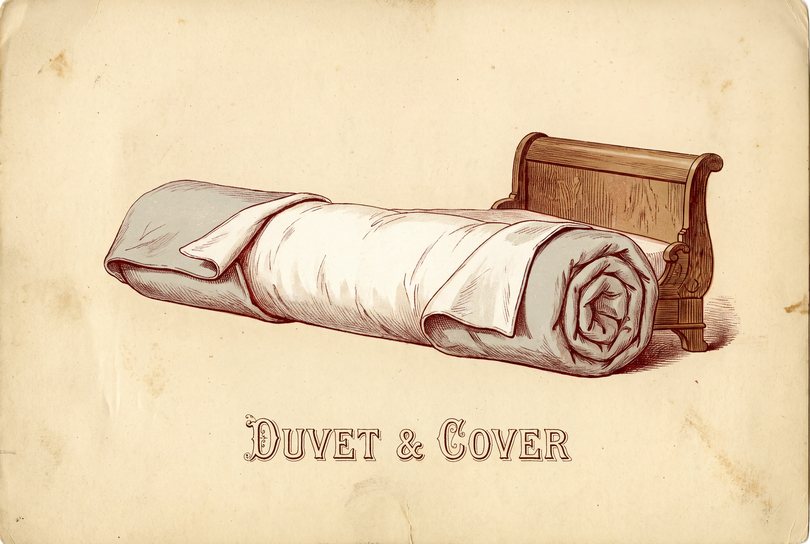
Picture a pillow in its pillowcase. Now stretch both to the size of your bed. The pillow part is the duvet. Wikipedia describes it as a soft flat bag filled with down, feathers, wool, cotton, silk, or a synthetic alternative. You typically protect it with a removable cover (Wikipedia). That cover is a separate piece of cloth. It has its own page here.
A duvet doesn't have to hold down. Cambridge calls it a large, soft, flat bag filled with feathers or artificial material, used as a covering on a bed (Cambridge Dictionary). Nothing in that says how warm it must be.
That helps you when you shop. A duvet can hold goose down, duck feathers, wool or polyester fiber. Whichever you pick, you are still buying a duvet. What makes it one is its job: a single filled layer that keeps you warm without a stack of blankets.
You will rarely see a print on the duvet itself. The cover supplies the look. So the duvet's shell is usually plain cloth. Is the outer fabric printed and sewn shut around the fill? Then you are probably holding a comforter in the American sense.
Think of the duvet as the warm part and the cover as the part you wash. That split is the whole idea.
Where does a duvet sit in the layers of a bed?
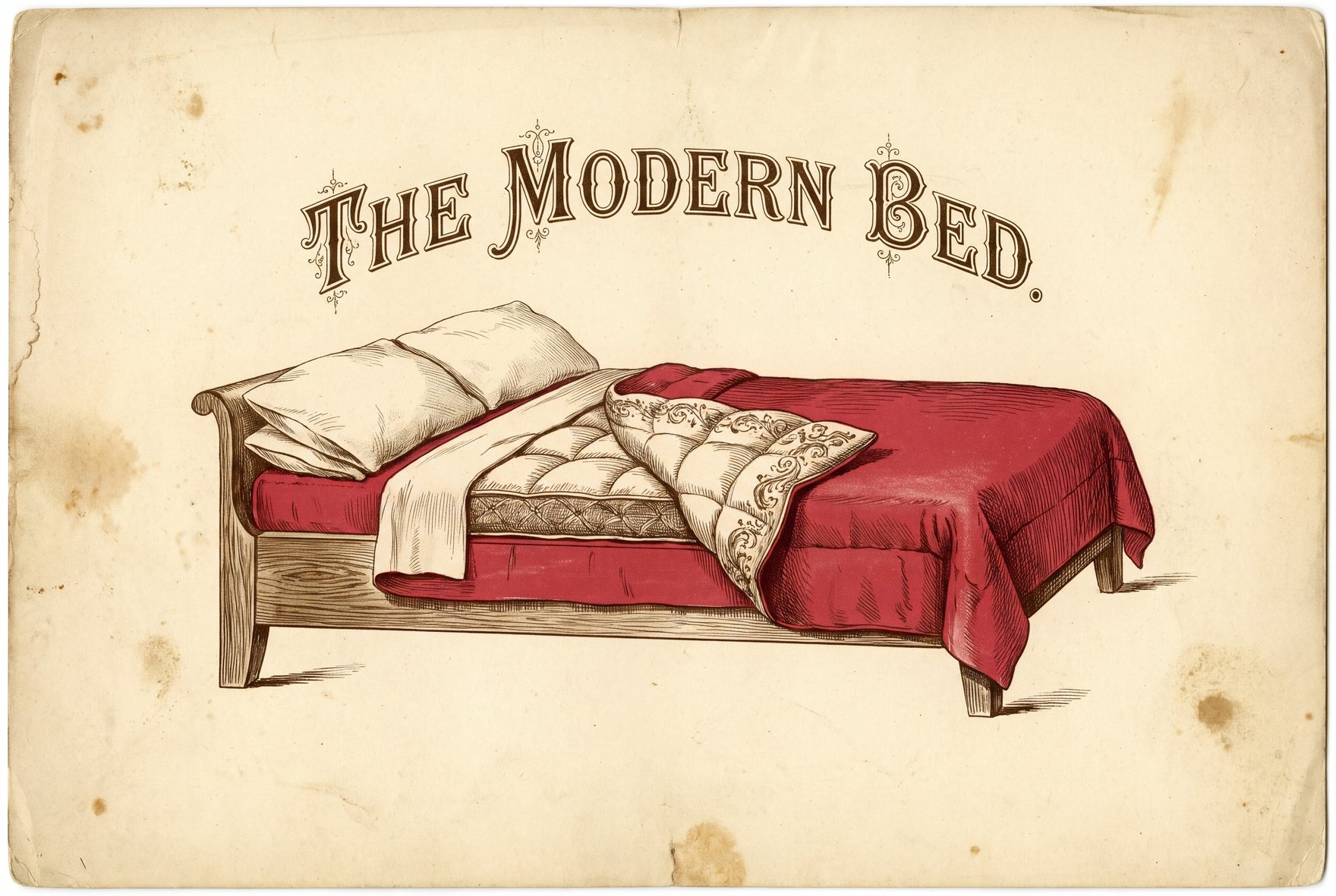
Counting up from the mattress, a duvet sits above the fitted sheet and any top sheet, and it is the last layer you sleep under.
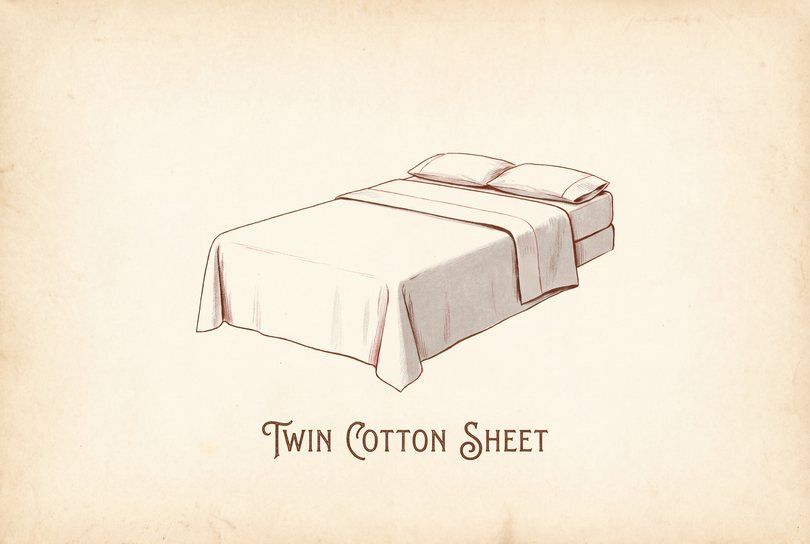
Start at the mattress and count upward. A protector or pad goes on first. Then comes the fitted sheet you lie on, and next the top sheet, if you use one. Your duvet, in its cover, goes over all of that. Your pillows sit at the head on the fitted sheet.
YourDictionary calls the duvet a style of comforter "used in place of a top sheet and blankets" (YourDictionary). So a duvet doesn't sit on top of a blanket bed. It replaces two of its layers. Whether you keep a top sheet is up to you, and our top sheet page covers it.
| Layer, from the mattress up | What it does | With a duvet (our judgement) |
|---|---|---|
| Mattress protector or pad | Shields the mattress from spills and sweat | Stays the same |
| Fitted sheet | The cloth you lie on, held by elastic corners | Always used |
| Top sheet | A flat sheet between you and the cover | Optional; many people skip it |
| Duvet inside its cover | The warm layer you sleep under | The duvet's place |
| Throw or coverlet | Folded at the foot for looks or a cold night | Optional extra |
| Pillows | At the head, resting on the fitted sheet | Stays the same |
The order above is our judgement, since no maker publishes it as a rule. You can add a throw on a cold night. You don't need blankets under the duvet.
Is a duvet the same thing as a comforter?
Mostly yes: the filled layer Americans call a comforter is a duvet, though US shops often use duvet to mean the empty cover.
For most purposes, a duvet and an American comforter are one object. Dictionary.com defines a duvet as a usually down-filled quilt, often with a removable cover, and then simply adds comforter (Dictionary.com). Wikipedia adds a twist. In US English the term is rare, and it typically refers to the cover, not the bedding itself (Wikipedia). So a US listing for a "duvet" may send you an empty cover.
Where people do draw a line, the duvet is the thicker one. You usually use it with a cover and without blankets or extra sheets (Wikipedia). An everyday American comforter often has its outer fabric sewn on for good. You wash the whole thing. With a duvet, you wash the cover. The filled layer stays on the bed most of the time.
The name also changes from country to country:
| Where you are | What people call the filled layer | Source |
|---|---|---|
| United States | Comforter; sellers also say duvet insert | Cambridge Dictionary |
| United Kingdom | Duvet, also continental quilt | Cambridge Dictionary |
| Australia | Doona | Wikipedia |
| Britain, in older use | Eiderdown, a thinner layer laid over blankets | Wikipedia |
If you follow British instructions for making a bed, read "comforter" wherever they say "duvet". On an American label, read slowly. There the word duvet might mean the cover you put over it.
What size is a queen duvet?
Queen duvets sold in the US are most often 90 by 90 inches, though a few sellers list them a little longer and one lists them shorter.
We read 10 seller product pages for queen-size duvets and duvet inserts on October 26, 2026, and counted the size each one stated. Each size in the table is copied as written from the page it links to. The pages fell into three buckets:
- 6 pages listed a square duvet, as wide as it is long.
- 3 pages listed a longer duvet, with extra length at the foot.
- 1 page listed a shorter duvet than the square size.
| Seller page | Queen size stated |
|---|---|
| Ravioli Linen queen insert | 90 x 90 in |
| Bloom Linen microfiber insert | 90 x 90 in |
| C&W goose down comforter | 90 x 90 in |
| Gray stripe goose down comforter | 90 x 90 in |
| RODown goose down comforter | 90 x 90 in |
| Royal Hotel goose down comforter | 90 x 90 in |
| Parachute down duvet insert | 90 x 94 in |
| Plumeria Bay Cascade Made 900 | 90 x 94 in |
| Down Etc tropical comforter | 90 x 96 in |
| Pure Down organic cotton comforter | 90 x 88 in |
Square sizing is the most common pattern in this small set. It is not a rule. A longer duvet gives you more fabric to tuck at the foot. A cover cut for a square duvet may leave a longer one bunched at the end. So when you shop for a cover, match its length as well as its width.
What goes inside a duvet?
Down, feathers, wool, silk or polyester fiber can all fill a duvet, and US labels follow set rules on when the fill may be called down.
Down is the classic fill. It is the soft cluster that grows under a bird's outer feathers. According to Wikipedia, duvets began in rural Europe, filled with the down feathers of ducks or geese (Wikipedia). You will find other fills on the shelf now. One queen insert in our count lists a polyester filling (Ravioli Linen).
Down labels in the US follow an industry standard. Under the American Down and Feather Council's rules, a product labeled "down" needs at least 75% down cluster, and the percentage must be listed (ADFC). The council allows no tolerance on that figure.
The federal government stepped back from this. The FTC once kept its own feather and down guides. It rescinded them in a Federal Register notice. The same notice set out a general enforcement policy on misleading claims about feather and down-filled products (Federal Register). So the down cluster line you see on labels is an industry standard, not a federal rule.
Read the fill line on a product page the way you read a food label. The first word tells you what is inside. The percentage tells you how much of it you get. Want to avoid feathers? Look for a wool or synthetic fill.
How is a duvet stitched to keep the fill in place?
Stitching divides a duvet into pockets so the fill cannot slide to one end; sewn-through boxes and baffle boxes are the two common ways.
Loose fill drifts. Without stitching, the down or fiber in your duvet would slide to the foot of the bed. You would be left under an empty shell. Makers stop that by dividing the duvet into pockets.
The simplest method is sewn-through box stitching. The top and bottom fabric are stitched straight together in a grid. Each square then holds its own share of fill. You pay for that at the seams. The two layers meet along the stitch lines. So you get almost no fill there. You may feel those lines run a little cooler.
In a baffle box duvet, narrow strips of cloth stand like walls inside the shell. They join top to bottom. Each box becomes a small room. Your fill can rise to its full height across the whole square. One seller claims its baffle box design keeps fill evenly distributed and prevents bunching and cold spots (Pure Down).
You will also see loops or tabs at the corners. One insert we read lists corner loops to keep the duvet cover in place (Egyptian Linens). Ties inside the cover knot onto those loops. That keeps your duvet square inside it. The steps are on our page about putting an insert into its cover.
How do sellers describe how warm a duvet is?
US sellers describe warmth with fill weight in ounces and fill power for down, while British sellers use a tog number instead.
No single US number tells you how warm a duvet is. Sellers use several separate measures instead. You have to read them together.
| Term on the page | What it means | What it does not tell you (our judgement) |
|---|---|---|
| Fill weight | Ounces of fill inside the duvet | How much room each ounce takes up |
| Fill power | How much space an ounce of down fills | How many ounces are in the duvet |
| Down cluster % | Share of fill that is down cluster; 75% minimum to say "down" (ADFC) | How warm the finished duvet is |
| Lightweight, midweight, heavyweight | A seller's own warmth band | Any standard shared between sellers |
| Tog | British measure of thermal resistance (Wikipedia) | Weight or type of fill |
Fill weight and fill power work as a pair. A higher fill power means each ounce of down takes up more room. The fill weight tells you how many ounces there are. Neither figure alone tells you how warm your duvet will feel. Warmth changes how well you sleep, too. A 2023 peer-reviewed study of six duvets found the warmer ones kept sleepers comfortable over a wider range of room temperatures (PubMed).
British shoppers get a single figure instead: the tog. It was developed at the Shirley Institute in Manchester, England, as a measure of thermal resistance, and it is often quoted on duvets (Wikipedia). None of the US pages we read gave a tog. If you see one on a US listing, the duvet was probably rated for the British market.
Where did the duvet come from?
Duvets began in rural northern Europe as bags of eider down, and Britain took them up after a London shop began selling them.
Duvets began in rural northern Europe. The first ones were filled with the down of the eider, a duck known for how well its feathers insulate (Wikipedia). The English name came later. It is French for down, and it traces back through Old French to the Old Norse word dūnn (Dictionary.com).
Britain held out for a long time. For years, British beds used an eiderdown, thinner than its continental equivalent, laid over a sheet and blankets for extra warmth (Wikipedia). Terence Conran had come across duvets in Sweden. He sold them at his London Habitat store. British sleepers came to prefer the duvet for the freedom of movement and reduced weight, and because it made the bed simpler to make (Wikipedia).
That history explains where your duvet sits. The old eiderdown went on top of everything as an extra layer. Your duvet replaces the blankets. So it goes straight over your sheets. In the US the filled layer mostly goes by comforter. That is why you still see the two words mixed up.
Common questions
Six short answers to questions people ask about duvets, from how to say the word to what a down label on the package means.
How do you say duvet?
You say it doo-VAY. Duvet came from French and kept its silent t in English (Dictionary.com). Wikipedia gives the British form as DOO-vay and the American form as doo-VAY (Wikipedia), so you will hear both.
Is duvet a British word?
Mostly, yes. Collins marks duvet as mainly British and notes that American English uses comforter instead (Collins). You will still see duvet on US product pages, usually meaning the insert or the cover.
Does a duvet replace a blanket?
It can. Wiktionary defines a duvet as a filled bag, usually with a washable cover, used instead of blankets (Wiktionary). You can still add a throw on a cold night, and nothing stops you from laying a blanket on top.
Can a duvet be filled with something other than down?
Yes. Wool, cotton, silk and synthetic fiber all fill duvets (Wikipedia). If the label uses the word down, though, the fill has to meet the down cluster standard described above. If it doesn't, the product should be labeled by what it contains.
Why does a down label show a percentage?
The ADFC standard requires the down percentage on the label, and blended products must list their minimum down content (ADFC). A label that meets the minimum may use the word down. A higher figure means you get more down in the mix.
What is a duvet jacket?
In British English, a duvet jacket is a down-filled jacket, used especially by mountaineers (Dictionary.com). You can guess the link. It is stuffed with down too. You won't find one in the bedding aisle.
Sources
Top Sheet's references for this piece, set out in citation order with the heading each one sits under.
- Wikipedia (en.wikipedia.org), sits under “What is a duvet?”; “Is a duvet the same thing as a comforter?”; “What goes inside a duvet?”; “Where did the duvet come from?”; “Common questions”.
- Cambridge Dictionary (dictionary.cambridge.org), sits under “What is a duvet?”; “Is a duvet the same thing as a comforter?”.
- YourDictionary (yourdictionary.com), sits under “Where does a duvet sit in the layers of a bed?”.
- Dictionary.com (dictionary.com), sits under “Is a duvet the same thing as a comforter?”; “Where did the duvet come from?”; “Common questions”.
- Wikipedia (en.wikipedia.org), sits under “Is a duvet the same thing as a comforter?”; “Where did the duvet come from?”.
- Ravioli Linen queen insert (raviolinen.com), sits under “What size is a queen duvet?”; “What goes inside a duvet?”.
- Bloom Linen microfiber insert (bloomlinen.ca), sits under “What size is a queen duvet?”.
- C&W goose down comforter (amazon.com), sits under “What size is a queen duvet?”.
- Gray stripe goose down comforter (amazon.com), sits under “What size is a queen duvet?”.
- RODown goose down comforter (amazon.com), sits under “What size is a queen duvet?”.
- Royal Hotel goose down comforter (egyptianlinens.com), sits under “What size is a queen duvet?”; “How is a duvet stitched to keep the fill in place?”.
- Parachute down duvet insert (parachutehome.com), sits under “What size is a queen duvet?”.
- Plumeria Bay Cascade Made 900 (plumeriabay.com), sits under “What size is a queen duvet?”.
- Down Etc tropical comforter (downetc.com), sits under “What size is a queen duvet?”.
- Pure Down organic cotton comforter (puredown.com), sits under “What size is a queen duvet?”; “How is a duvet stitched to keep the fill in place?”.
- ADFC (downandfeathercouncil.com), sits under “What goes inside a duvet?”; “How do sellers describe how warm a duvet is?”; “Common questions”.
- Federal Register (govinfo.gov), sits under “What goes inside a duvet?”.
- Wikipedia (en.wikipedia.org), sits under “How do sellers describe how warm a duvet is?”.
- PubMed (pubmed.ncbi.nlm.nih.gov), sits under “How do sellers describe how warm a duvet is?”.
- Collins (collinsdictionary.com), sits under “Common questions”.
- Wiktionary (en.wiktionary.org), sits under “Common questions”.