What is a flat sheet, and do you need a top sheet at all?
Updated .
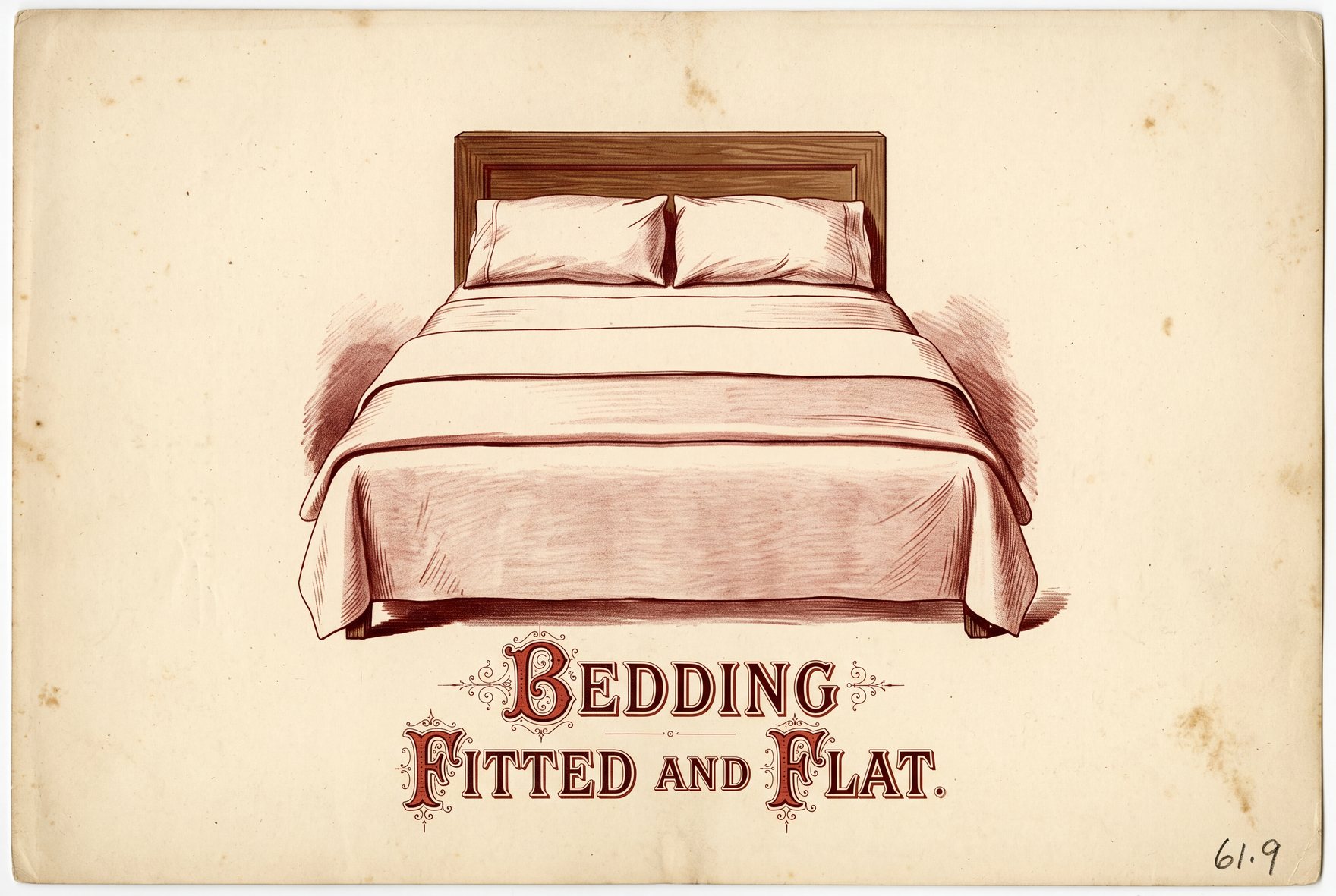
A flat sheet is the plain rectangle of fabric with no elastic that lies between you and your blanket. Many people call it a top sheet. Most older Americans use one, and younger adults are far less likely to (YouGov). This page sets out both sides. It ends with a clear call for each kind of bed.
Short answer: A flat sheet and a top sheet are one item. It is a plain, hemmed rectangle that lies over you and under your blanket. You need one if the layer above it is hard to wash. The sheet catches sweat and skin and goes in the weekly load. You can skip it if you wash your duvet cover every week. The US EPA advises washing bedding in hot water once a week, and allergists set hot at 130 F (ACAAI).
This guide is for: anyone deciding whether to buy, keep or drop the flat sheet in a US-size sheet set.
Key Takeaways
Three points carry the whole article: what a flat sheet is, how many people still use one, and when you can safely go without it.
- A flat sheet is a top sheet. A standard queen flat sheet is 90 by 102 inches, which leaves about 15 inches hanging down each side of a queen mattress (AllModern).
- Most Americans still use one. 79% of people aged 55 and up always or often do, against 49% of people aged 18 to 24 (YouGov, 2018).
- Skip it only if you wash the layer above you weekly. The US EPA advises washing bedding in hot water once a week (US EPA), and allergists put hot water at 130 F (ACAAI).
On This Page
The eight questions this guide answers, in order, each worded exactly as its section heading so you can jump straight to the one you need.
What is a flat sheet, and how is it different from a top sheet?
A flat sheet and a top sheet are one item: a hemmed rectangle with no elastic that lies over you, under the blanket or duvet.
The two names describe one piece of fabric. "Flat" tells you how it is made, with no elastic and no shaped corners. "Top" tells you where it goes. It sits above you, not under you. The sheet with elastic corners that grips the mattress is the fitted sheet, sometimes called the bottom sheet.
A standard sheet set bundles both, plus pillowcases. One large furniture retailer lists its queen set as one flat sheet, one fitted sheet and two pillowcases (AllModern). The flat sheet you get is far bigger than the mattress. That is on purpose. Its extra fabric hangs down the sides so you can tuck it under.
Most flat sheets you buy have a wider hem along one edge. That edge goes at the head of the bed. You fold it back over your blanket. So lay the sheet with its finished side facing down, and the good side will show once you turn it over.
Our guide to the difference between a flat sheet and a fitted sheet covers the full comparison. Here it is in one line: the fitted sheet protects the mattress, and the flat sheet protects the blanket. Health advice backs that split. A county health department tells people with allergies to use fitted sheets to cut the skin that builds up on the mattress (Macomb County Health Department). Keep the second job in mind. Every argument for or against the top sheet comes back to one question. What do you do with your blanket?
How many people still use a top sheet?
Most American adults still use a top sheet, but younger people are far more likely to skip it, and surveys disagree on how many.
The most solid public numbers come from a pollster. YouGov found that most older adults always or often use a top sheet, while under half of the youngest adults do (YouGov). The youngest group was more than twice as likely to say they never use one. Men and women gave nearly matching answers.
A second survey counted more quitters. It polled people across large US cities and found that nearly a third had dropped the top sheet for a fitted sheet alone (Sleep Junkie). That survey came from a sleep-product review site, not a pollster. Treat its figures as a rough signal, not a census of American beds.
| Survey | Who was asked | What it found |
|---|---|---|
| YouGov | US adults | 79% of people 55+ always or often use a top sheet; 49% of 18 to 24 year olds do |
| Sleep Junkie | 2,700+ people in 25 US cities | 32% use only a fitted sheet; Baby Boomers dropped it more often than millennials |
The two surveys disagree on who quits most. YouGov puts the youngest adults furthest from the habit. The second survey found Baby Boomers dropping it at a higher rate than millennials. Neither survey can tell you what your own bed needs. They only show that both choices are common. You can pick either one without being unusual.
What does a top sheet do for hygiene?
A top sheet catches sweat, skin and oil before they reach a blanket you rarely wash, so the item touching you goes in the weekly load.
The practical case for a top sheet comes down to laundry. Whatever touches your skin all night collects sweat, body oil and dead skin. Dust mites feed on that skin. Health bodies agree that bedding touching you should be washed often and hot. The US EPA tells families to wash bedding in hot water once a week and dry it completely. Allergists put hot water at 130 F (ACAAI). The cleaning products trade group also advises washing sheets weekly (American Cleaning Institute).
Not every group sets the bar that high. The American Lung Association says to wash bedding once a week in water of at least 120 F. Either way, the rhythm is weekly. Every source above agrees on that part.
A flat sheet fits in any home washer. A thick comforter may not. So the sheet lets you follow weekly advice without hauling a bulky blanket to a laundromat. That is the whole hygiene argument, and it carries the most weight for anyone who sleeps under a heavy quilt. If your top layer is easy to wash, the argument gets weaker, as the next two sections show.
What is the case against a top sheet?
The case against is comfort and effort: a flat sheet tangles, untucks and adds a step to making the bed, and a duvet cover can do its job.
The usual complaints are easy to list. The sheet twists around your legs and pulls loose at the foot. By morning it can end up in a knot. It adds one more layer to straighten each day and one more item to fold on laundry day.
Many of these complaints trace back to fit. A flat sheet that is too small for a deep mattress will not stay tucked. Regular sheets are cut for mattresses up to about 14 inches deep, and taller beds usually need deeper sizes (SouthShore Fine Linens). A sheet that tucks well under a thin mattress may barely reach the edge of a thick one.
Heat is the other complaint. Any extra layer holds in a little warmth, and if you sleep hot you notice it in summer. A thin percale sheet adds less than a heavy one. You will still feel it, though.
The strongest point against the top sheet is simple. If what sits above you is already washable, the sheet does work your duvet cover already does. A duvet cover you strip weekly gives you a clean surface with one fewer layer to manage. That trade is where the choice sits. The next section looks at it directly.
Can a duvet cover replace a top sheet?
Yes, if you wash the duvet cover as often as your sheets. A cover washed monthly leaves you sleeping against a dirtier layer than a sheet.
A duvet cover is a washable case that zips or buttons around a thick insert. It comes off for washing. That is the whole point. Used that way, it does a flat sheet's job. You get one clean layer against your skin.
The catch is effort. Stripping and refilling a duvet cover every week takes longer than pulling off a flat sheet. Will you let the cover go for a month? Then keep the flat sheet. The EPA's weekly-wash advice covers bedding in general, not only sheets (US EPA). In short, the layer over you needs a washable skin.
Fit matters here too. A cover that is larger than its insert lets the filling slide into one corner. That is not a sheet problem. Even so, it can push people back to a top sheet. A loose flat sheet is easier to fix at night than a twisted duvet.
One rule settles it. Pick the top layer you will wash every week, then build the bed around it. If that is the duvet cover, you can skip the sheet. If it is the sheet, keep it and wash the cover less often. Either way, one layer stays clean against your skin.
What size flat sheet fits your bed?
Buy the flat sheet labeled for your mattress size, then check that the width leaves enough overhang to cover the depth of your mattress.
US flat sheets come in a common set of sizes. The figures below come from one retailer's listing of twin, full, queen and king sets (AllModern). Other sellers you check usually land close to these. The overhang column is our own arithmetic, using the fitted-sheet widths AllModern lists.
| Bed | Flat sheet | Side overhang (our arithmetic) |
|---|---|---|
| Twin | 66 x 96 inches | about 13.5 inches |
| Full | 81 x 96 inches | about 13.5 inches |
| Queen | 90 x 102 inches | about 15 inches |
| King | 108 x 102 inches | about 15 inches |
To check fit, subtract the mattress width from the sheet width and halve the result. That is the drop on each side. You want it several inches more than your mattress depth. Anything left over is what you tuck.
A queen sheet leaves enough to suit a mattress around a foot deep. Past that, you get a thin tuck. Soon the sheet starts to pull loose.
If your mattress is deeper, look for a seller that lists an oversized flat sheet with its exact measurements. Measure your mattress at a corner before you shop. The middle can read lower. Our guides to choosing a flat sheet and to king size flat sheet dimensions go further into sizing.
Do sheet sets still come with a flat sheet?
Most sets still include one. Of the seller pages we read, most bundled a flat sheet, one offered a set without it, and one sold none.
We read 7 seller product pages for queen sheet sets on September 26, 2026, and counted what each page states about the flat sheet. This is a count of claims on pages. No sheet passed through our hands. The pages were not a random sample. We looked on purpose for sets without a flat sheet, so the last bucket may be larger than a typical store shelf would show.
| What the page states | Pages | Which pages |
|---|---|---|
| Flat sheet included, no flat-free option stated | 5 | Brooklinen, Saatva, Linen Home, Walmart complete set, Walmart four-piece set |
| Flat sheet included, fitted-only set also offered | 1 | Quince |
| No flat sheet in the product | 1 | Walmart fitted sheet and pillowcase set |
The flat sheet is still the default in a standard four-piece set. The one page that offered a choice listed a sheet set with a flat sheet alongside a fitted sheet set without one. Quince's collection page says fitted-only sets exist for people who prefer to skip the top sheet (Quince). The sheet-free set said so in its title. You are unlikely to buy one by accident.
Who should keep a top sheet, and who can skip it?
Keep it if your top layer is hard to wash or you have allergies. Skip it if you wash a duvet cover weekly and the extra layer annoys you.
This table is our editorial judgement, built from the washing advice cited above. No seller publishes it. Adjust it to your own habits.
| Your situation | Our call | Why |
|---|---|---|
| Comforter or quilt too big for your washer | Keep the top sheet | It lets you wash the layer touching you weekly |
| Dust mite allergy or asthma | Keep it, or wash a duvet cover weekly and hot | Allergy advice calls for weekly hot washes of bedding |
| Duvet cover you strip every week | Skip it if you like | The cover already does the sheet's job |
| You sleep hot | Try a thin percale sheet before dropping it | A light sheet adds little warmth |
| Mattress deeper than about 14 inches | Keep it only if you size up | A standard sheet will not stay tucked |
| Two people who want different warmth | Keep it | One person can sleep under the sheet alone |
The top sheet earns its place when it is the easiest thing on the bed to wash. When something else is easier, the sheet becomes optional. Dropping it is then a reasonable choice.
If you are keeping yours, fit matters more than fabric. A sheet with enough overhang stays put. That answers most of the complaints against it. Are you dropping it instead? Then commit to the weekly duvet cover wash. That habit is what makes going without a top sheet work for you.
Common questions
Short answers to the questions people ask most often about flat sheets, top sheets, sheet sizes and how often to wash each one.
Is a flat sheet a top sheet?
Yes. Both names describe one hemmed rectangle with no elastic. "Flat" names its shape, and "top" names its place above you on the bed.
Which side of a flat sheet faces up?
Lay the finished side face down, with the wide hem at the head of the bed. When you fold that edge back over the blanket, the good side shows.
Can you use a flat sheet instead of a fitted sheet?
You can, by tucking it tightly under all four sides. It will work loose faster than a fitted sheet, especially on a deep mattress.
How often should you wash a top sheet?
Weekly is the common advice. The US EPA says to wash bedding in hot water once a week and dry it completely.
Is it unhygienic to sleep without a top sheet?
Not if you wash whatever touches you as often as a sheet. It becomes a problem when that layer goes weeks between washes.
What size flat sheet does a queen bed need?
A standard queen flat sheet is 90 by 102 inches (AllModern). That leaves room to tuck on a queen mattress of ordinary depth.
Sources
Top Sheet's references for this piece, set out in citation order with the heading each one sits under.
- YouGov (today.yougov.com), sits under “Key Takeaways”; “How many people still use a top sheet?”.
- US EPA (epa.gov), sits under “Key Takeaways”; “What does a top sheet do for hygiene?”; “Can a duvet cover replace a top sheet?”; “Common questions”.
- ACAAI (acaai.org), sits under “Key Takeaways”; “What does a top sheet do for hygiene?”.
- AllModern (allmodern.com), sits under “Key Takeaways”; “What is a flat sheet, and how is it different from a top sheet?”; “What size flat sheet fits your bed?”; “Common questions”.
- Macomb County Health Department (macombgov.org), sits under “What is a flat sheet, and how is it different from a top sheet?”.
- Sleep Junkie (sleepjunkie.com), sits under “How many people still use a top sheet?”.
- American Cleaning Institute (cleaninginstitute.org), sits under “What does a top sheet do for hygiene?”.
- American Lung Association (lung.org), sits under “What does a top sheet do for hygiene?”.
- SouthShore Fine Linens (southshorefinelinens.com), sits under “What is the case against a top sheet?”.
- Brooklinen (brooklinen.com), sits under “Do sheet sets still come with a flat sheet?”.
- Saatva (saatva.com), sits under “Do sheet sets still come with a flat sheet?”.
- Linen Home (amazon.com), sits under “Do sheet sets still come with a flat sheet?”.
- Walmart complete set (walmart.com), sits under “Do sheet sets still come with a flat sheet?”.
- Walmart four-piece set (walmart.com), sits under “Do sheet sets still come with a flat sheet?”.
- Quince (quince.com), sits under “Do sheet sets still come with a flat sheet?”.
- Walmart fitted sheet and pillowcase set (walmart.com), sits under “Do sheet sets still come with a flat sheet?”.
- Quince (quince.com), sits under “Do sheet sets still come with a flat sheet?”.