Are sateen sheets worth it, and how do you pick a good set?
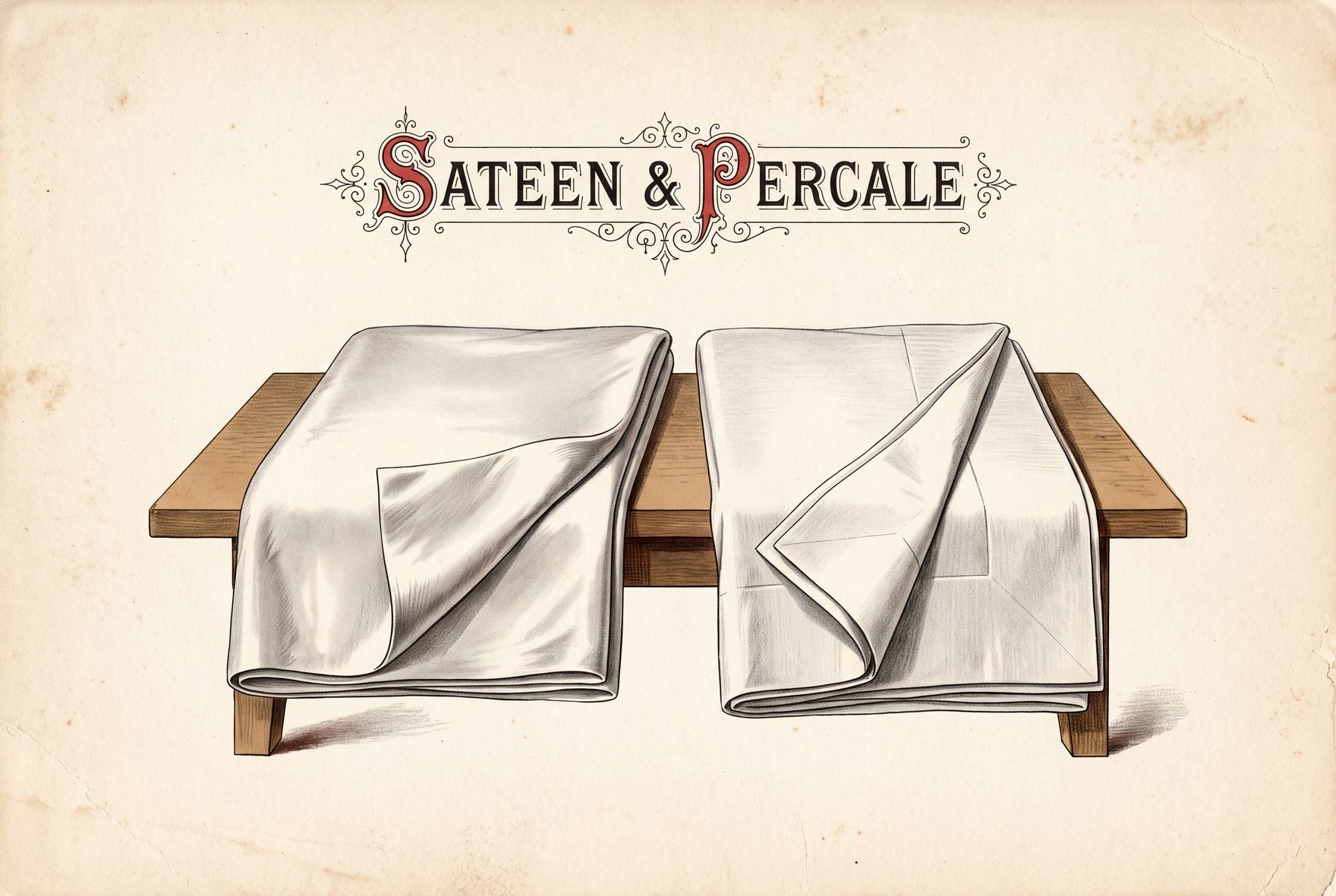
Sateen sheets are cotton sheets woven so that most of each yarn lies on the surface. You feel that as a smooth, slightly slippery face with a soft shine. Whether they suit you depends on how warm you sleep. It also depends on what the label claims. This guide covers both.
Short answer: Sateen is a weave, usually four yarns over and one under, that makes cotton feel smooth and look faintly glossy. Buy it if you want a soft, drapey sheet and you do not run hot. Look for pure long-staple cotton, counted one yarn at a time. Treat very big numbers as a question. A Consumer Reports textile expert called 400 the sweet spot and said you can't get 1,000 threads on a loom (Consumer Reports).
This guide is for: people choosing between sateen and percale, or trying to judge a sateen listing before they pay.
Key Takeaways
Three points carry most of this guide. They cover what sateen is, how you should read its count, and what the listings we read claimed.
- Sateen is a weave, not a fiber. The usual version floats each yarn over 4 others and under 1. That puts more yarn on the face you touch and gives sateen its smooth feel and soft sheen, whatever fiber it is made from.
- Thread count should mean 1 count per yarn. FTC staff have said that counting the plies inside a yarn can mislead you, so a sheet woven from two-ply yarn should not have its count doubled. Ask how a high number was reached.
- 3 of the 11 sateen listings we read claimed more than 600. Only 1 said its yarn was single-ply, and 1 of the high counts was a cotton and polyester blend.
On This Page
The eight questions below follow the order most people ask them in, from what sateen is to how to wash it without wearing it out. Jump to any one you need.
What are sateen sheets?
Sateen sheets are usually cotton woven with long floats, so most yarn sits on the surface. That gives a smooth feel, soft sheen and heavy drape.
Sateen is the name of a weave, not a material. It uses the satin weave structure, but with spun yarn in place of filament yarn (Wikipedia). So a satin sheet and a sateen sheet can look alike on a shelf. In your bed, they feel quite different. The yarn makes the difference, and you notice it at first touch.
In a plain weave, each yarn passes over one and under one. In a satin weave the yarns float, for example four over and one under (Wikipedia). Those runs are called floats. They leave more of each yarn lying flat on the face. That flat yarn is what you feel. Consumer Reports explains that in sateen the crosswise threads skip over a few others before looping under again (Consumer Reports).
It also explains why your sheet has two sides. The face shines softly. The back, which you see less often, looks duller.
The floats have a cost, though. The structure frays more readily and is less durable than plain weave fabric (Wikipedia). A float is yarn with nothing holding it down for a stretch. Your rough heel or a cat's claw can pull it.
Most sateen you will find in the US is cotton, though some sellers also make it from blends, including rayon made from bamboo or lyocell (The Company Store). The weave name tells you nothing about the fiber. Read the fiber line on its own. For the plain-weave side of the story, see our guide to what percale sheets are and how to pick a good set.
What thread count should sateen sheets have?
Start with a stated count of 300 to 600, counted one yarn at a time. Above that, ask how the seller counted, since plies can inflate the figure.
Thread count is the number of yarns in one square inch, lengthwise plus crosswise. Your trouble starts with plies. Some sellers twist thin strands into one yarn. Then they count every strand. The FTC's position is that each yarn counts as one thread, single-ply or multi-ply (Agathon Associates).
A later FTC letter spelled out the honest wording (FTC). You should see the count followed by the ply, as in 300 thread count, two-ply yarn. Calling that same sheet 600 would likely mislead you (Home Textiles Today). You could be paying for a doubled number.
A high number is not always false, though. In Consumer Reports tests, the top cotton sateen set claimed a very high count. Yet some low-count sheets beat higher ones (Consumer Reports). Our judgement is to start in the usual range and ask questions above it. No maker publishes the table below. It is how you might read a listing.
| What the listing says | What it most likely means | What you can do |
|---|---|---|
| Usual range, single-ply named | A normal sateen, counted the standard way | Judge it on fiber and feel |
| Usual range, ply not stated | Probably honest, not certain | Buy if the fiber is right |
| Above the usual range, single-ply named | Possible with very fine yarn | Ask whether an outside lab checked it |
| Above the usual range, ply not stated | Plies may have been counted | Ask for the single-yarn count first |
| High count with "two-ply" or "multi-ply" | The count may be multiplied | Divide by the ply number |
What thread counts do sateen sheet listings claim?
We read 11 sateen product pages and sorted each by the thread count it stated. Three claimed more than 600, and only one named its yarn ply.
We read 11 sateen sheet product pages on September 23, 2026, all found through general searches for sateen sheet sets. We sorted each page by the thread count it stated, into three buckets. Nothing was bought or handled here. No threads were counted either. You are looking at a count of what sellers wrote. Our method page explains how we choose and read pages.
| Bucket | Pages | Listings we read | What you could do |
|---|---|---|---|
| States 600 or below | 5 | sheetsnthings; CGK Unlimited; California Design Den; Threadmill; California Design Den, second set | Judge on fiber and feel |
| States above 600 | 3 | Madison Park, at Designer Living; Pure; Ella Jayne | Ask how the count was made |
| No count in the text we read | 3 | J. Queen New York; Organic Cotton Mart; Walmart, Hotel Life | Ask the seller, or judge on fiber |
Only one page named its yarn ply. The second California Design Den listing says it uses single-ply long-staple cotton. It also says independent labs verified the count (Amazon). That is the detail you want to see.
One high count came with a catch. The maker's own page for the Madison Park set gives its fabric as 56% cotton and 44% polyester (Madison Park). A blend can carry a big number and still not be the cotton sateen you pictured. Eleven pages is a small sample. It shows you what you are likely to meet, not the whole market.
How is sateen different from percale?
Percale crosses each yarn over one and under one, so it feels crisp and matte. Sateen floats its yarns, so it feels smoother and hangs heavier.
Percale and sateen can be spun from the same cotton. What changes is how the yarns cross. Percale uses a one-over, one-under grid. That gives it a crisp feel and a matte finish (Consumer Reports). That tight grid is why percale feels like a pressed shirt against your skin.
Sateen gives you slip and drape instead. The Sleep Foundation notes that people often like sateen for its silky texture, drape and resistance to wrinkles. Many prefer percale for its crispness, breathability and durability (Sleep Foundation). You can likely tell the two apart by touch alone.
| Sateen | Percale | |
|---|---|---|
| How yarns cross | Over several, under one | Over one, under one |
| First touch | Smooth and a little slippery | Crisp and dry |
| Look | Soft sheen on the face | Matte |
| Wrinkles | Fewer, softer creases | More, sharper creases |
| Snag risk (our judgement) | Higher, with more loose yarn on the face | Lower |
| Who tends to like it (our judgement) | People who want a soft, heavy bed | People who run warm or like a crisp bed |
Neither weave is better. You are choosing a feel. If you like the smooth hand of sateen, you may find percale scratchy at first. If you love a crisp bed, sateen may feel limp to you. If linen is also on your list, our guide on whether to buy linen sheets or percale sheets covers the third option.
Do sateen sheets sleep hot?
Sellers say sateen runs warm, yet a lab study of cotton found satin passes more air. How densely a set is woven matters more than the name.
Almost every seller tells you sateen is warmer than percale. One retailer says the tighter weave makes a warmer fabric suited to people who sleep cool (The Company Store). The lab evidence points another way.
A study of cotton fabric compared several weaves woven at the same densities. Satin let more air through than twill or plain weave. Plain weave is the structure percale uses (PMC). Our reading is that fewer crossing points leave more gaps for air to pass.
So why might you find sateen warmer? Our reading is that construction does it, not the float. Sateen sets are often packed with more, finer yarns. A heavier sheet lying on your skin also holds a layer of warm air. That is a judgement, not a finding. We found no study of finished retail sheets that settles it.
What this means for you is simple. If you run hot, the weave name alone will not help you. A light sateen can sleep cooler than a heavy percale. Weight and density matter more than the word on the package. When a seller lists fabric weight, you should compare it. When they do not, a lower thread count is your safer bet.
Which cotton should sateen sheets be made from?
Long-staple cotton spins into smoother, stronger yarn. That matters more in sateen, where so much of each yarn lies exposed on the face.
Cotton fibers come in different lengths, which the trade calls staple. Longer fibers spin into finer, smoother yarn. Sheets made from short-staple cotton, commonly Upland, are simply labeled cotton (Consumer Reports). That plain word is your clue.
Length decides how long your sheets last. Consumer Reports found pima, Supima, Egyptian and other long-fiber cottons typically stronger and less likely to pill (Consumer Reports). You will feel it within a season.
Why does this weigh more on sateen? Every float is a length of yarn lying loose on the face, so short fiber ends have more room to work free and ball up. That is our reasoning from the weave, not a measured result.
What you want on the listing is pure cotton plus a named long-staple type, such as pima, Supima or Egyptian. If the page says only "cotton", you should assume short staple. Polyester sateen and blends cost less. You may find they feel slick. They are a different product from cotton sateen. You should compare them with each other, not with cotton sets.
Do sateen sheets pill or snag more than percale?
Sateen has fewer crossing points holding each yarn down, so it snags and frays more easily than percale. The fiber decides how fast it pills.
Every crossing point you see in a weave pins a yarn in place. Sateen has fewer of them than percale. That is where both its smoothness and its weakness come from.
A study of woven cotton found plain weaves pilled less and were stronger than twill. It credited the higher number of interlacements (PMC). That study compared plain and twill, not satin. Satin has fewer crossings still. So we expect it to sit further along the same line. That fits the textbook note that sateen frays more readily than plain weave.
Fiber decides how soon you see pilling. Long-staple cotton pills less, as you saw above. If you buy a cheap short-staple sateen, it can look fuzzy within months. A long-staple set in the same weave holds its face much longer.
A few habits help you. Keep your heels smooth and toenails trimmed. Keep pets with sharp claws off the bed if you can. Wash your sheets apart from zips, hooks and hook-and-loop tape. A snag in sateen is a pulled float. Ease it back through with a needle. Never cut it. A cut float leaves a hole that grows.
How do you wash sateen sheets so they last?
Wash warm on a gentle cycle, skip bleach, tumble dry low and take them out promptly. Heat and friction wear the floats down fastest of all.
Seller care instructions for cotton sateen agree closely. One listing tells you to machine wash warm, tumble dry low and remove promptly to reduce wrinkles (Amazon). Another asks you to wash before first use, on a delicate cycle with like colors, with no bleach and a low tumble dry (Costco).
The reason is friction and heat. In your machine, long floats rub against each other and the drum. High heat leaves cotton dry and brittle. Pulling sheets out while barely damp saves you ironing and spares the fibers the last, hottest minutes of the cycle.
Fit matters for wear too. If your fitted sheet is stretched too tight, it strains its corners and seams. Consumer Reports suggests you measure your mattress height in at least two spots, including any topper. Then you buy sheets a couple of inches deeper to allow for shrinkage (Consumer Reports).
Two sets in rotation spread the washing across more fabric. Each set sees fewer cycles a year. You also always have a clean set ready.
Common questions
Six short answers to the questions people ask most often about sateen, from satin mix-ups to shiny sides and whether high counts pay off.
Is sateen the same as satin?
No. They share a structure but not a yarn. Sateen uses spun yarn. Satin uses filament yarn (Wikipedia). That is why satin feels slicker to you at first touch.
Are sateen sheets a good choice if you run hot?
They are not the usual first pick. Lab work shows the weave itself passes air well. Many sateen sets you will see are dense and heavy, though. If you run hot and still want sateen, choose a lighter set in pure cotton.
Is a very high thread count sateen better?
Not by the number alone. Consumer Reports found some low-count sheets beat higher counts. Before you pay more, ask whether the count was made one yarn at a time.
Why does one side of my sateen sheet shine?
The floats lie on the face. So that side reflects more light. Make your bed with the shiny side up. The duller back is the same fabric seen from underneath.
Does sateen wrinkle less than percale?
Usually, yes. The Sleep Foundation lists wrinkle resistance among the reasons people like sateen (Sleep Foundation). Taking sheets out of the dryer promptly helps you with either weave.
Do sateen sheets soften with washing?
Sellers say so. One listing says its sateen gets softer after each wash (Amazon). You should expect the sheen to fade slowly as the surface wears.